
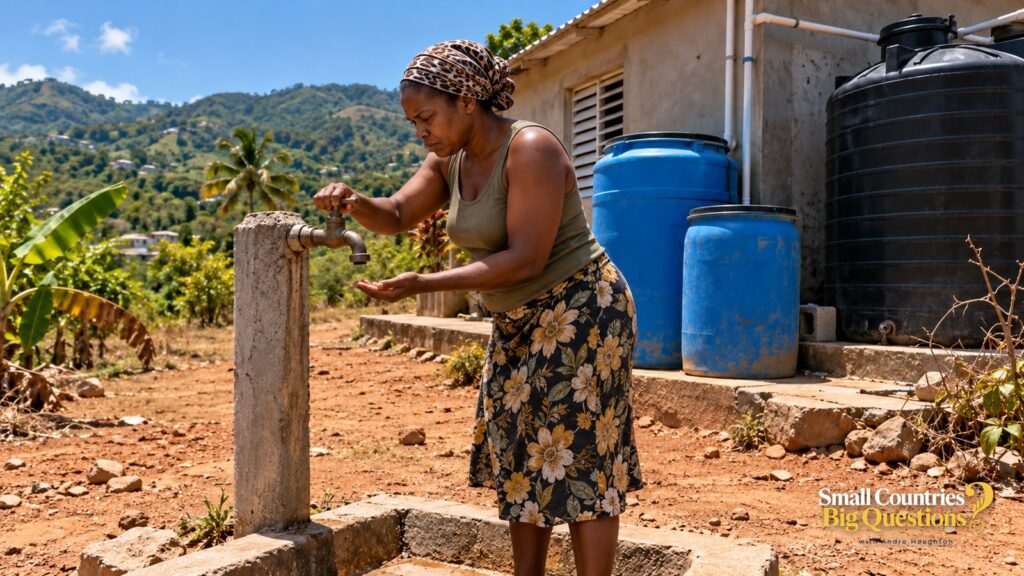
As of September 30, the Mona Reservoir was at 33.5 per cent of its full capacity and Hermitage Dam at 40.3 per cent. The National Water Commission reports that drought is affecting 107 of its water systems, and some facilities are producing no water at all. For many Jamaicans, this means turning on the pipe and hearing air.
The water truck is the new business, as inconsistent supply forces families to ration, purchase and store water.
I have raised this before. In a recent article, I said the budget for irrigation, drainage and water storage must deliver these systems before the next drought. This article looks at where that money is going.
Where does the water go?
The NWC supplies roughly 190 million gallons of potable water each day from wells, rivers and springs. The Office of Utilities Regulation reports that 73.4 per cent of the water put into the system in 2025 earned no revenue. This includes water lost through leaking pipes and water that is never metered or billed. In Kingston and St Andrew and in Portmore, where the NWC has run loss-reduction projects, the figure is down to between 38 and 40 per cent, which means losses in the rest of the island are even higher.
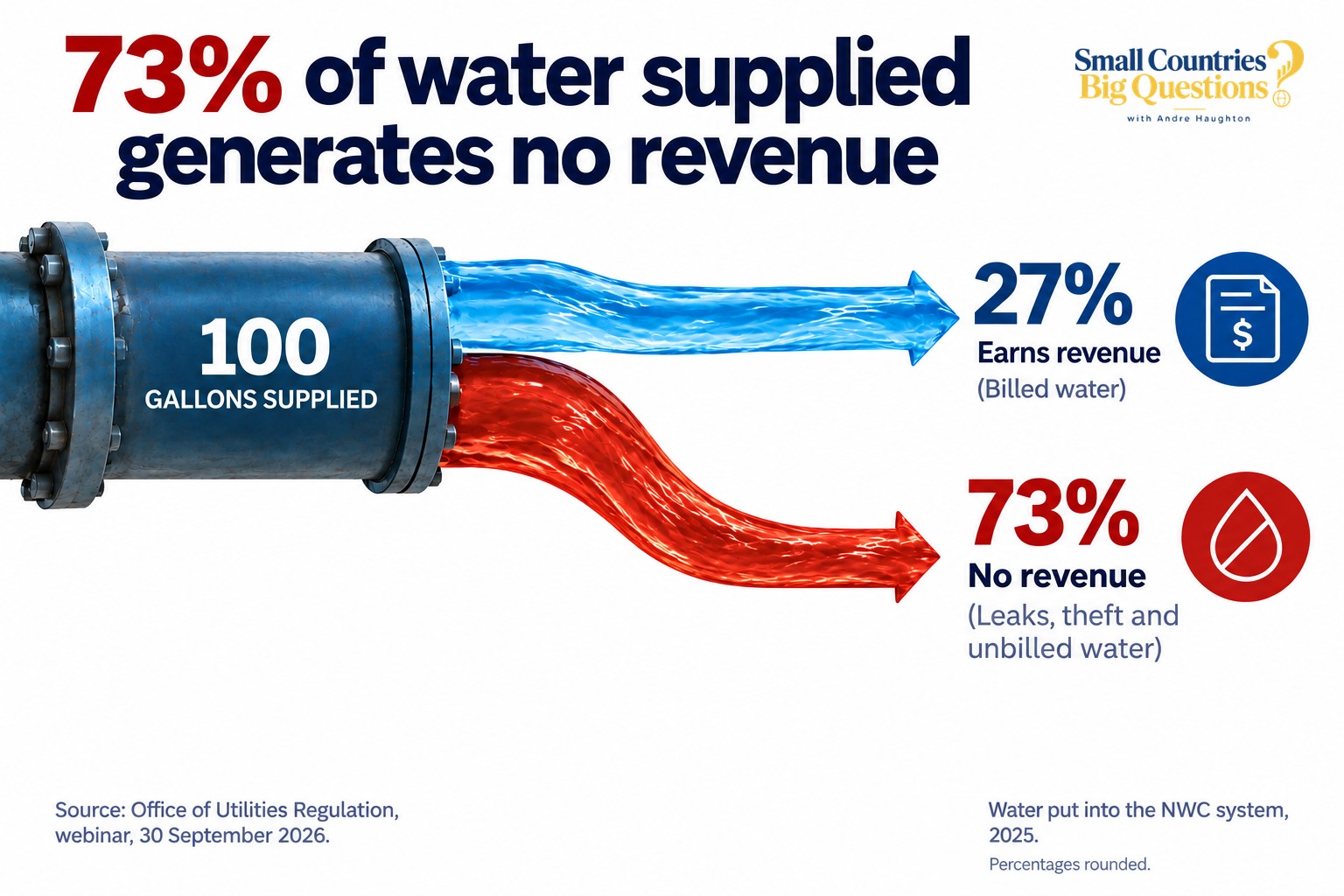
We pay to extract water, treat it and pump it into the network. Then most of it disappears before the utility collects any revenue. Households should conserve water during a drought, but a country cannot ask households to save every drop while the system carrying those drops loses most of them.
Does Jamaica have a water shortage?
Jamaica receives about 1,870 millimeters of rain a year on average, according to the Meteorological Service of Jamaica. The rain does not fall evenly across the island or through the year. During heavy rain, water runs through gullies and rivers and out to sea. Months later, river flows decline, springs weaken and reservoirs fall.
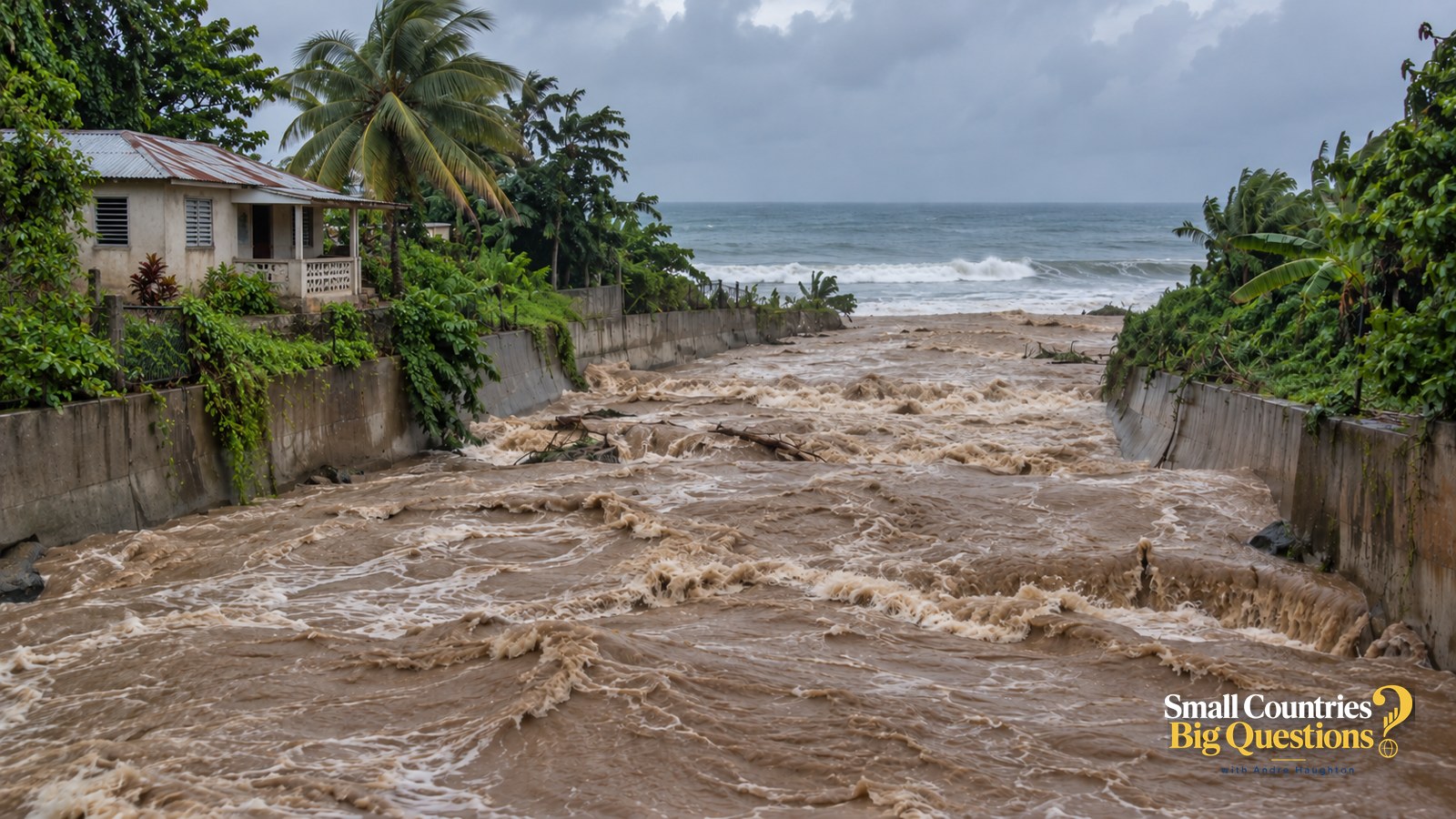
The slightest amount of rainfall floods parts of Kingston and Montego Bay, our two main cities. Roads go under water, including Mona Road in Kingston and Catherine Hall in Montego Bay, and business activity slows down. Poor water management costs us during drought and again every time it rains.
Portland is one of the wettest parishes in the country, but some communities there still go days without piped water. Mandeville depends on water pumped uphill from the Pepper wells in St Elizabeth. Montego Bay keeps adding hotels and homes. The challenge is moving water from where it falls to where people live and farm.
The Government has started on this. The 2026/27 budget allocated J$11 billion to the Western Parishes Water Supply and Resilience Improvement Programme. Losses along the Martha Brae–Great River corridor are estimated at about 71 per cent.
How much has been budgeted, and where?
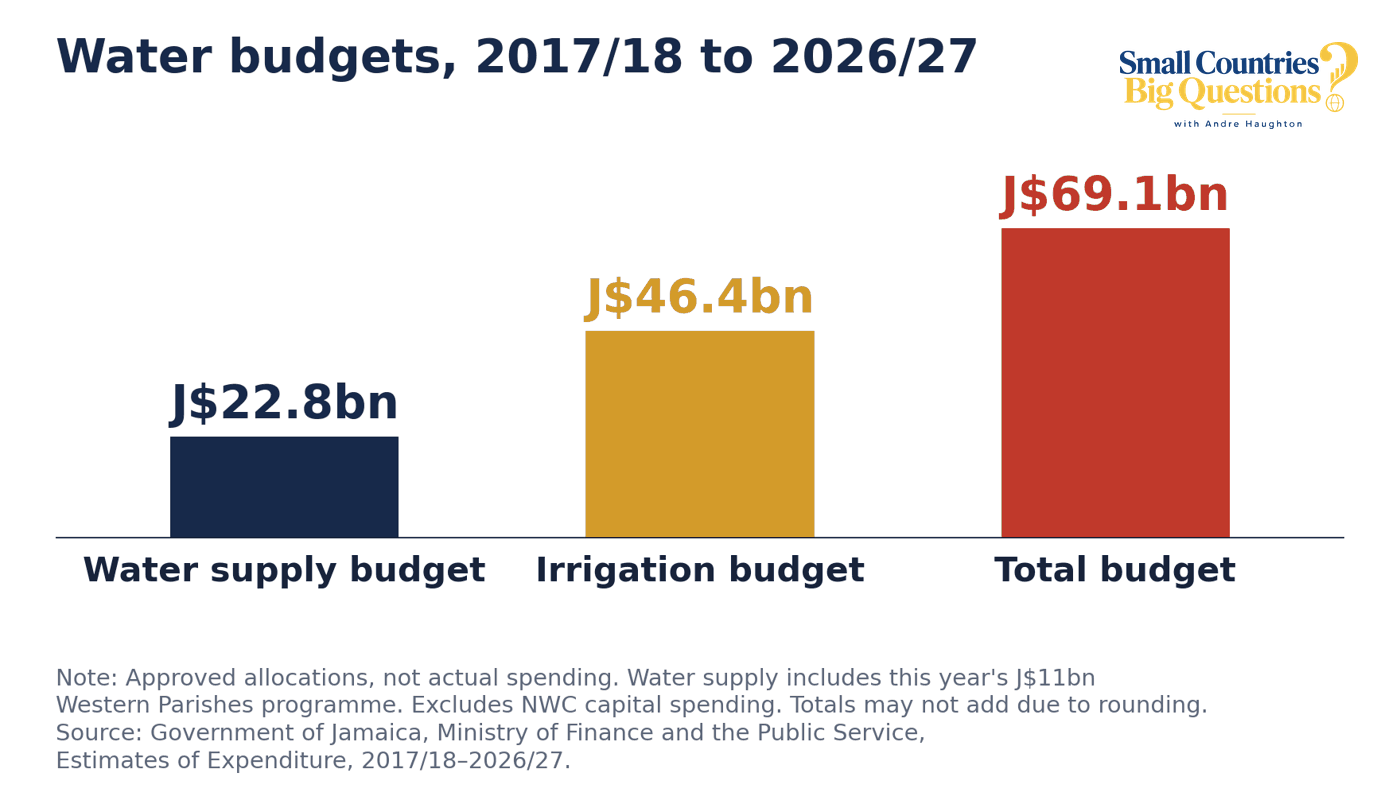
Over the last ten budgets, from 2017/18 to 2026/27, the Government allocated about J$69 billion to water supply and irrigation. These are allocations, not actual spending.
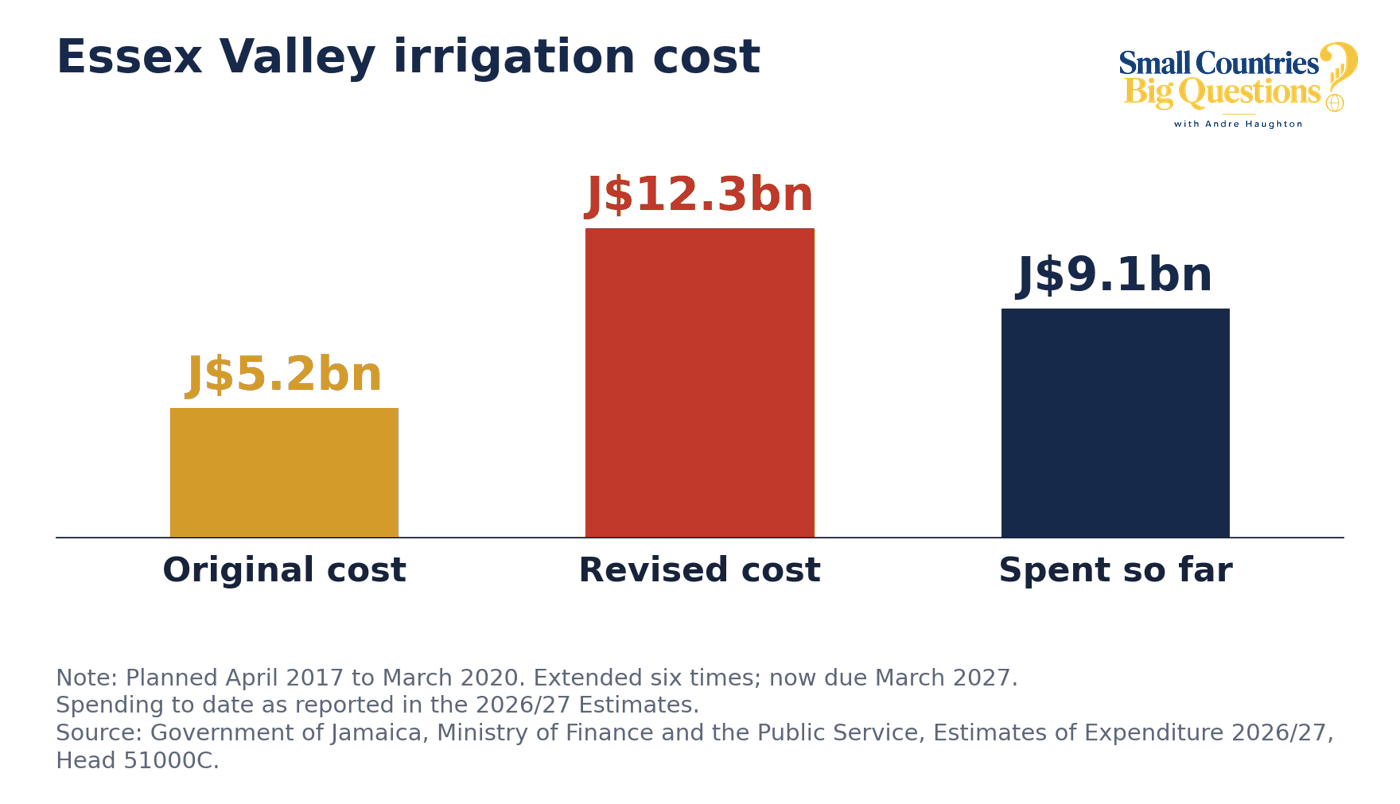
One of the most significant projects of the lot is the Essex Valley irrigation programme in St Elizabeth, which was meant to run from 2017 to 2020 at a cost of J$5.2 billion. It has since been extended six times, its estimated cost has risen to J$12.3 billion, and J$9.1 billion has been spent. It is now due in March 2027. Eight wells were drilled and five produced water.
Projects like this should be judged by the hectares receiving reliable water, the farmers connected and the yields achieved, rather than by the amount allocated. About 70 per cent of Jamaican farmers depend on rainfall. In the current drought, RADA has delivered 1,900 truckloads of water across eight parishes, and crop production was reported down by about 15 per cent.
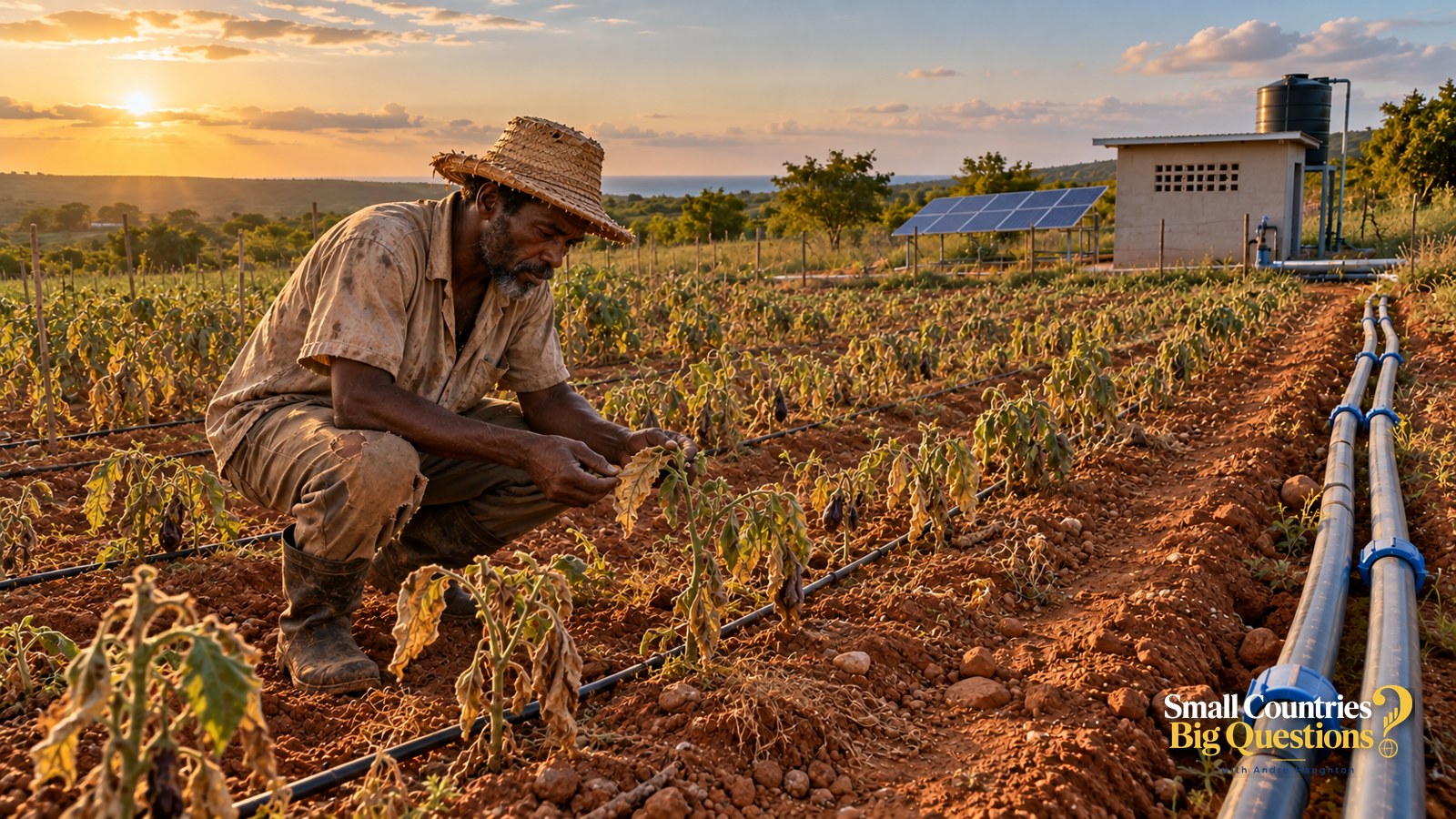
Drought reduces local production, and this scarcity causes market prices to increase. This would not be so if farmers had reliable irrigation, which protects farmers’ incomes, the food supply and consumers at the same time.
What should we fix first?
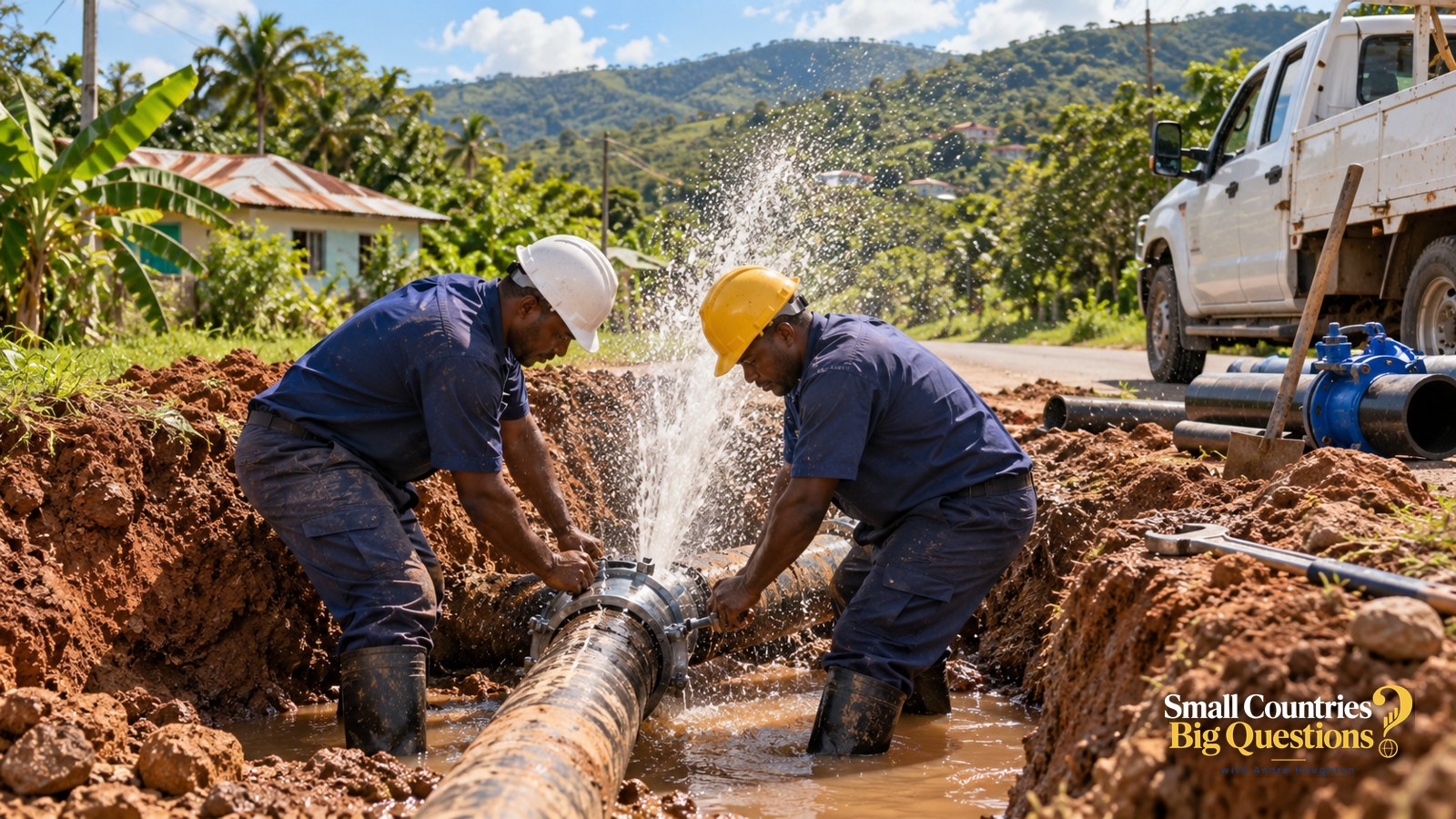
First, reduce leakage. Recovering water we already produce is often cheaper than finding a new source. Other Caribbean countries are moving in this direction. This year I worked on the economic and financial assessment of the TransWater Programme in St Kitts and Nevis, which is being prepared for the Green Climate Fund. The programme divides the water network into smaller metered zones so leaks can be found and fixed, and adds meters at the treatment and desalination plants to track the water produced.
Second, build more storage, so we capture more of the heavy rain instead of watching it run out to sea.
Third, connect our water systems, so a parish with water can supply one under stress.
Fourth, protect the watersheds and aquifers that produce our water. Every new hotel room, housing development and farm creates a demand for water that lasts for decades. Water belongs on the same list as roads, electricity and ports as a foundation for growth.
Jamaica has water. What we have not built is a system that captures, stores and moves enough of it to where people need it, when they need it. That is a problem we can solve.
How has the water situation affected your household or your farm? Tell me in the comments.
Andre Haughton is a Professor of Economics at the University of the West Indies (UWI), Mona, specializing in international finance, global political economy, the structural challenges facing developing economies, and development in small states. He is the author of Overcoming Productivity Challenges in Small Countries: Lessons from Jamaica and Developing Sustainable Balance of Payments in Small Countries: Lessons from Jamaica. He has been recognized as the University of the West Indies’ Most Outstanding Researcher (2017) and for the Most Outstanding Research Project (2024), was named UWI Alumnus of the Decade (1999–2009), and is an IMF Distinguished Academic Fellow. Beyond academia, he is engaged in entrepreneurship, youth development initiatives, and strategic economic thinking aimed at advancing Jamaica’s development trajectory.
Interesting piece.
Upgrading infrastructure including the ability to move water efficiently is the big issue as you highlighted.
Building new reservoirs is waaaaaay down on list of considerations unless the reference is water from gullies and drains in urban centers where unfortunately land to do so is an issue (hence dealing with watersheds and groundwater recharge is even more important)… before even contemplating the engineering costs associated with it
Improving watersheds and getting water effectively into groundwater systems is less costly and brings greater rewards per unit of water captured.
Improving water use by farmers is needed. Tons wasted here.
Posted for a CCOLD BOY
Thank you, Wilfred, and please thank the CCOLD BOY for me. You have the ranking right: reservoirs are costly and land-constrained, so recovering water we already produce and getting it into groundwater through healthy watersheds gives far more water per dollar. With non-revenue water above 70 per cent along some corridors, the cheapest new source we have is the water we are already losing. And you are right about farms, where roughly 70 per cent depend on rainfall and a great deal is wasted for want of efficient irrigation. Fix the leaks, protect the watersheds, then talk about storage. Thank you for a sharp, practical comment.
One area you did not mention is the rapid urbanization of some of the most productive aquifers in Jamaica, case inpoint Bernard Lodge and Inswood. This area is one of the most productive alluvium aquifer in Jamaica. Identified as same was equipped with underground wells to irrigate Lands for times like these experiencing climate departure. Bad policy decisions and hustling have led to significant parts of these areas been used for housing over the past few years. The impact of this is two fold, 1) reduced aquifer recharge due to reduced agricultural activities and attendant irrigation that recharge the aquifer 2) Acute food shortages, high prices and food security issues.
The mismanagement of our God given gifts by demigods are destroying the fabric of our beautiful country for personal economic gains by our political heads.
An excellent addition, James, and one I should have named. Bernard Lodge and Inswood sit on some of the most productive alluvial aquifers we have, and paving them over for housing is a double loss: less recharge as irrigated agriculture retreats, and less local food production, which means higher prices and weaker food security. It is the same theme as the article: we treat water and the land that stores it as if they were free, then pay for it in drought and in the food import bill. Protecting watersheds and aquifers belongs on the same priority list as roads and ports. Thank you for strengthening the point.
Andre
Personal anecdotes are not scientific proof, but they are highly useful when applied to the right context. The context is exactly what you accurately highlight: recovering the massive amounts of water currently leaking out of this decaying infrastructure would actually be cheaper than trying to find entirely new water sources.
Kingston was experiencing a severe drought when I was teaching at the Mona campus from 2015 to 2016. Even the washrooms had no running water. You remember that well! In my housing complex, we had to bucket water up from a tank three floors down. This included all the expats who were volunteering their services for free ‒ think of that, free ‒ coming from as far away as Japan and France. Because the water tank would empty in no time, we spent weeks fetching water in plastic buckets from a cistern. This is the Third World, I said to myself.
I finally discovered the root cause of our complex’s issue: the ground a few feet in front of the outdoor tap was always wet. I called management and asked them to send a crew to check the water line, suspecting it might be broken. Weeks passed, and nothing was done. Eventually, a crew arrived, dug a trench in the dirt lane to expose the line, and, sure enough, it was broken. It turned out it had been crushed by the heavy water trucks. I explained all of this to management, but the trucks just continued coming and going.
I sense a deep degree of frustration in your article. While it is true that “money” is scarce and numerous economic and social needs are constantly competing for budget allocations, proactive management and strong financial oversight could make things much better, even at the margin. I often use the analogy of a household on a tight budget: with a sensible ranking of priorities, no one in that household would go to bed hungry, and the kids would still be able to go to high school.
Terence