

Two out of every three Jamaicans who left the labour force over the past year were young people.
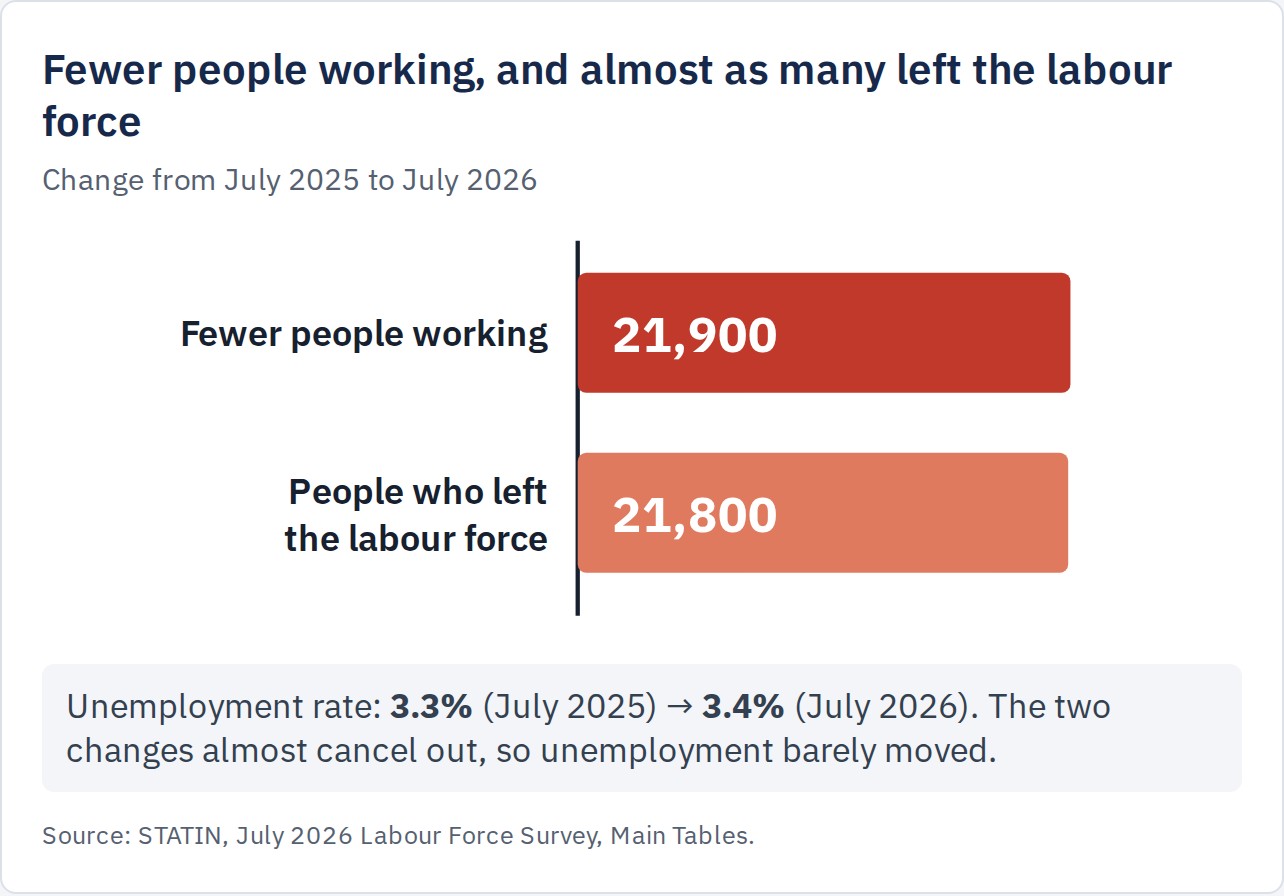
Jamaica’s workforce and its labour force are both shrinking. According to STATIN’s data, 21,900 fewer Jamaicans were working than a year earlier. The data also shows that roughly the same number, about 21,800 people, left the labour force and are neither working nor looking for work. The net effect has left the unemployment rate relatively unchanged.
Who was hit hardest?
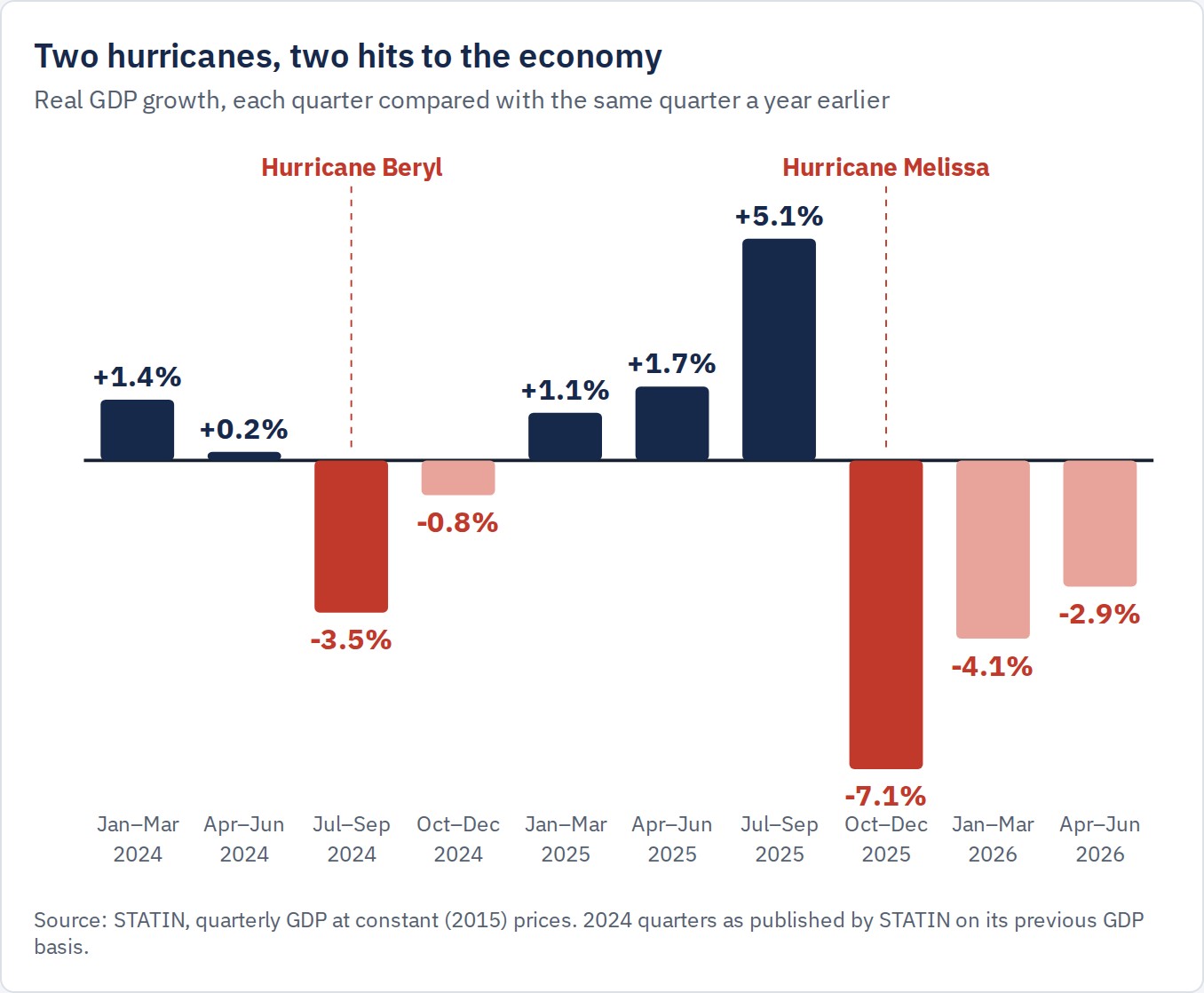
Women and young people are the most affected. Of the 21,900 who lost their jobs, more than half were women, about 13,300. Many of them worked in tourism, retail and services, the industries hit hardest by Hurricanes Melissa and Beryl. Melissa especially ravaged hotels, businesses and infrastructure across the island, forcing many hotels and other enterprises to shut their doors. The economy contracted by 7.1 per cent in the October to December 2025 quarter, its sharpest fall since the COVID-19 pandemic. Hotels and restaurants lost almost a third of their output.
Leaving paid employment can sharply reduce a household’s income. This is worse for women, who head many households in Jamaica. The longer they go without pay, the more endurance they must find to cope and survive. It also becomes harder for them to return, as their skills fade and their contacts are lost. For a young person, a year out of work at the start of a career can affect earnings for many years after.
What about the people who are working?
A low unemployment rate can give a false impression of a productive economy providing comfort for its citizens. But low unemployment coupled with falling GDP signals a very underproductive economy. Walk into a supermarket in Jamaica. One person cashes your items, another packs your bags, and a third checks your receipt as you leave through the door. In the United States, for example, you go to Walmart, scan your own goods, pay the machine and leave, without a single interaction with an employee. Similarly, at a Jamaican gas station, someone pumps the gas for you. In America, you pump it yourself.
In our book, Overcoming Productivity Challenges in Small Countries: Lessons from Jamaica, Wendel Ivey and I found that most industries in Jamaica use more labour than they need to produce their output.
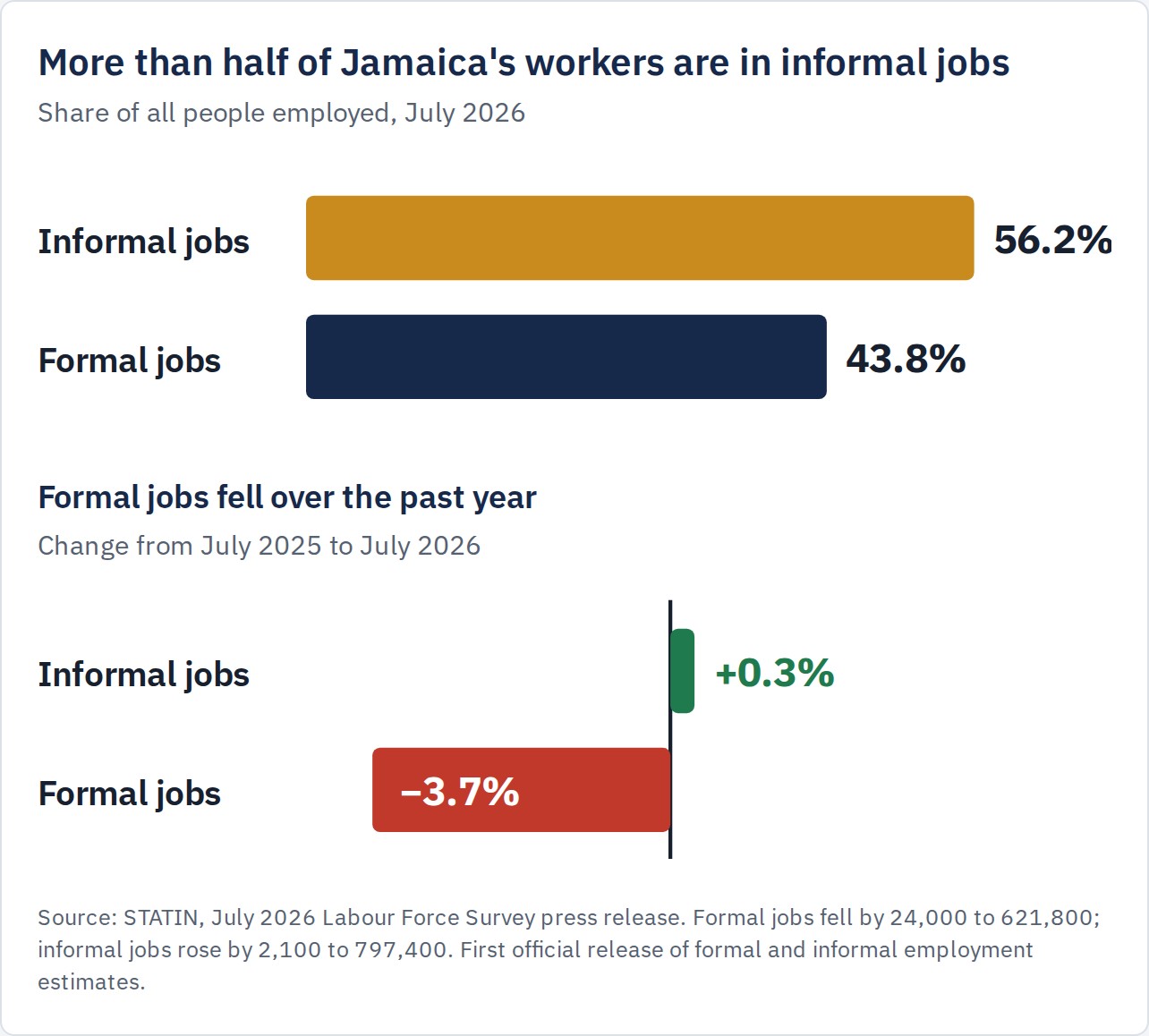
In Jamaica, a larger share of workers is now in the informal economy. STATIN data shows that 56.2 per cent of employed Jamaicans work in informal jobs. Over the past year, formal jobs fell by 24,000, while informal work held steady.
These jobs are a good poverty alleviation strategy. However, if Jamaica is to generate higher incomes, the labour complexity of our economy must improve. When it takes three people to do the work of one, each worker produces a third of what they could in an efficient workplace. We need workers with the right skills, education and mindset to move up to higher-value jobs. We are in a new world, and our labour force must improve to reflect this and leapfrog to meet the world where it is.
Why are our skilled workers leaving?
The domestic situation has become a repellent to many young professionals, and migration makes the problem worse. According to United Nations estimates, Jamaica loses about 10,000 more people to migration than it gains each year.

Fewer than 300 teachers resigned from the public school system between July and August this year. That is fewer than last year, but each resignation leaves the front of a classroom empty.
The shortage of nurses is so serious that Jamaica is now recruiting them from abroad. The first 43 specialist nurses from Ghana arrived in Kingston on September 27, the start of an agreement to bring in 400 health workers. The Minister of Health has acknowledged that Jamaica may not be able to compete on salary.
What will bring the workers back?
Even when growth returns, growth alone will not bring these workers back. Here are four suggestions that could help.
First, put more effort into helping affected businesses reopen their doors, urgently. The government should help clear any delays in approvals, insurance payments and building materials.
Second, make it possible for women to return to work. Provide targeted support for women, like childcare assistance and safe, affordable transport, to those who are eligible.
Third, put young people to work in the recovery. Reconstruction needs carpenters, masons, electricians and plumbers. Paid apprenticeships linking HEART/NSTA Trust training directly to rebuilding projects would give young people skills and an income while the country rebuilds.

Fourth, give our skilled workers a future here. Businesses must invest in technology, equipment and training, so that each worker produces more and can be paid more. Employers, including the government, also need clear paths for promotion and better working conditions for nurses, teachers and young professionals.
Have you, or someone you know, left work since the hurricane? Tell me in the comments.
Andre Haughton is a Professor of Economics at the University of the West Indies (UWI), Mona, specializing in international finance, global political economy, the structural challenges facing developing economies, and development in small states. He is the author of Overcoming Productivity Challenges in Small Countries: Lessons from Jamaica and Developing Sustainable Balance of Payments in Small Countries: Lessons from Jamaica. He has been recognized as the University of the West Indies’ Most Outstanding Researcher (2017) and for the Most Outstanding Research Project (2024), was named UWI Alumnus of the Decade (1999–2009), and is an IMF Distinguished Academic Fellow. Beyond academia, he is engaged in entrepreneurship, youth development initiatives, and strategic economic thinking aimed at advancing Jamaica’s development trajectory.
If Jamaica’s unemployment rate remains low mainly because thousands of people are leaving the labour force rather than finding productive employment, should we still treat unemployment as the main measure of labour-market health? Would labour-force participation, productivity per worker and formal-sector job creation give us a more accurate picture of whether the economy is actually improving?
How severe is Jamaica’s brain drain in economic terms if many of those who migrate continue sending remittances back home? Do the foreign-exchange and household-income benefits from remittances meaningfully offset the loss of skilled workers, taxpayers and future productivity, or are we still losing more economic value than we gain?
The government must take a look at the informal labour force for taxation purpose as the few of us left in the formal work environment will not be able to meet the PAYE tax demand.