
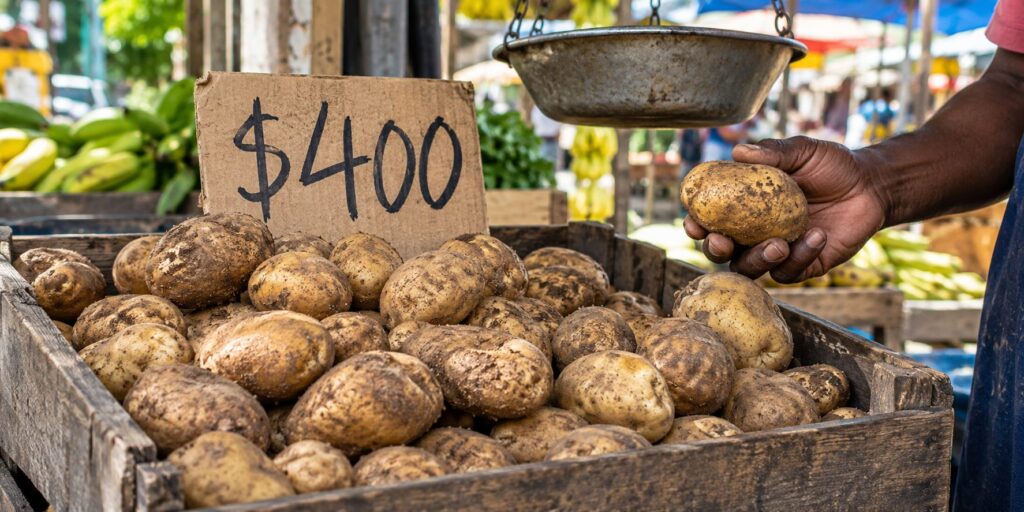
On a recent trip to the market, I paid $400 for a pound of potatoes. Normally, they cost about $200 a pound. This reduces the average Jamaican’s ability to plan and properly budget.
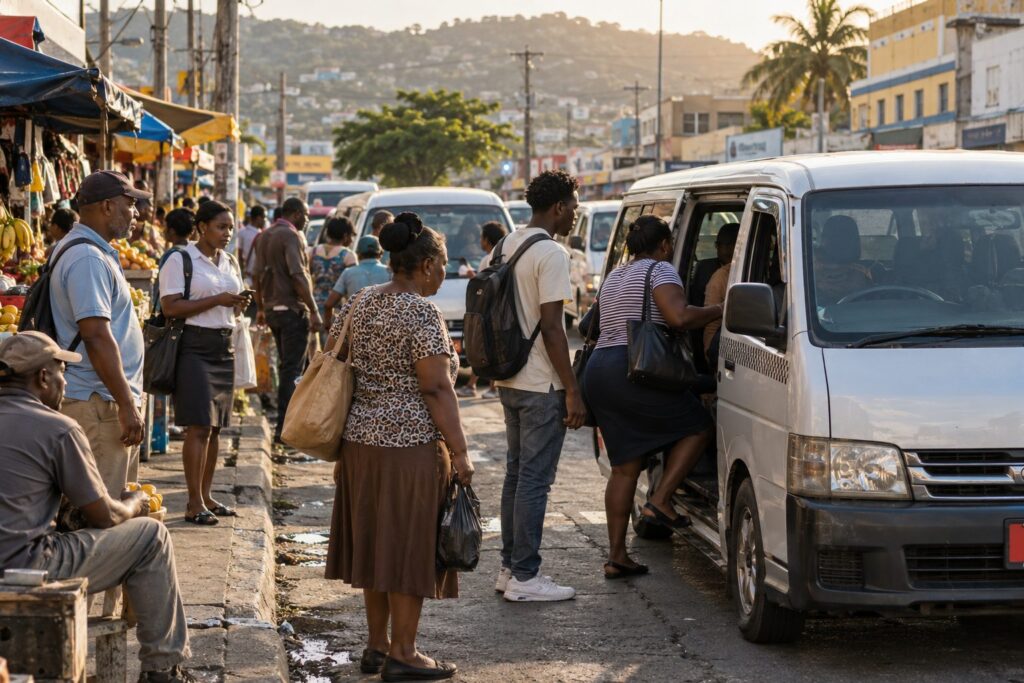
STATIN’s data confirm this volatility. In January and February, prices were 3.9 per cent higher than a year earlier, below the BOJ’s target of 4 to 6 per cent. February was the month of the glut, when vegetable prices fell 11.3 per cent in a single month. By August, prices were 7.9 per cent higher than a year earlier, more than double the rate in January, and inflation has been above the target range since June. Food and transport, pushed up by vegetable prices and taxi fares, have risen fastest.
These are the two costs a family cannot avoid, and they weigh most heavily on households whose incomes have not recovered from Hurricane Melissa, which struck in October 2025, just over a year after Hurricane Beryl. War in the Middle East has pushed up fuel costs at the same time. As a small island economy, Jamaica is susceptible to external shocks, and a slow recovery leaves us exposed when the next one arrives.
Why are food prices so high?
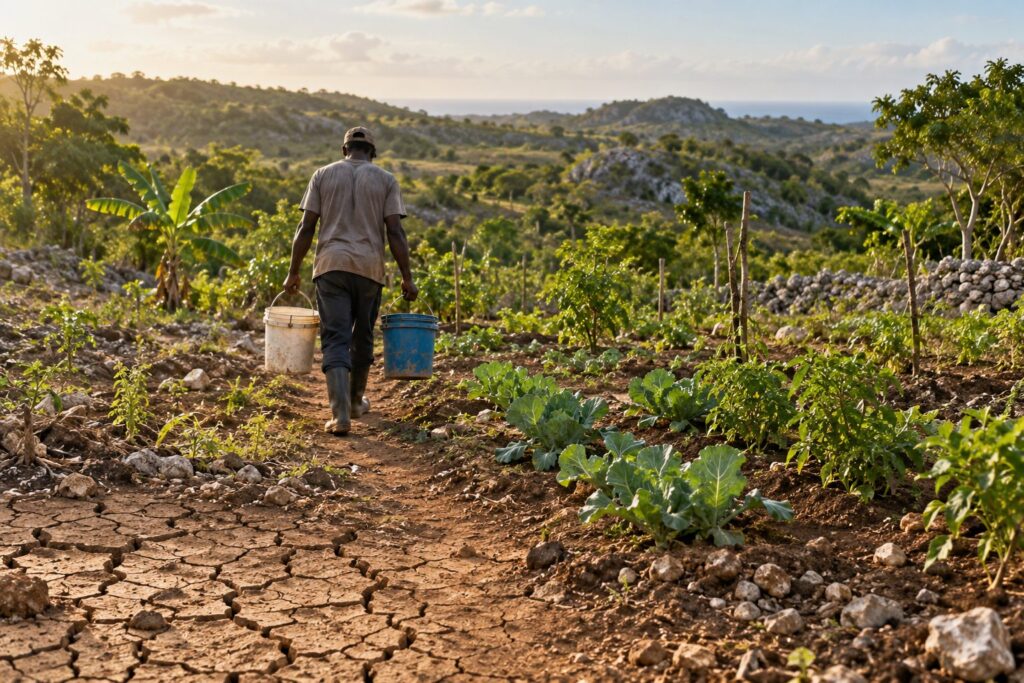
We cannot blame every increase in the market on a war overseas. Jamaica has its own recurring sources of price instability. Too little rain reduces what farmers can grow. Too much rain destroys crops and damages the roads farmers need to get their produce to market. When supply falls, households pay more, and farmers who have lost their crops have little left to sell. When the weather is good and every farmer reaps at the same time, the market is flooded and prices fall so low that farmers barely cover their costs. Without storage to hold part of that harvest for the dry months, prices swing from one extreme to the other.
Melissa made this much worse. The Planning Institute of Jamaica (PIOJ) estimates that agriculture, forestry and fishing fell 17 per cent in April to June 2026 compared with the same period last year. Banana production fell 72 per cent and plantain 77.5 per cent. Now drought linked to El Niño is hitting farmers who had not yet recovered from the hurricane.
I have raised this problem before. We know drought will return. We know flooding will return. Government must ensure that the budget allocated for irrigation, drainage and water storage actually delivers these systems before the next drought. A farmer needs water while the crop is growing. Assistance after the crop has died cannot bring back the harvest.
Is the economy recovering?
The economy has now contracted for three consecutive quarters, each compared with the same quarter a year earlier, but the decline is getting smaller. In April to June 2026, output was 2.9 per cent lower than a year earlier. The PIOJ now expects the economy to return to its pre-Melissa size as early as April to June 2027, about a year sooner than it first projected. That is welcome. The economy is still smaller than it was a year ago, however, and the PIOJ’s Director General has said that rebuilding homes, infrastructure and livelihoods will take three to five years.
The longer reconstruction takes, the longer households wait for jobs and income to return. There were 25,700 fewer Jamaicans employed in April than a year earlier, and two out of every three of them were women. Youth unemployment has risen to 11.7 per cent. When a farmer cannot produce, there is less work for the people who reap, transport and sell the crop. When a small business cannot reopen, its owner loses income and its workers go home.
Why is reconstruction taking so long?
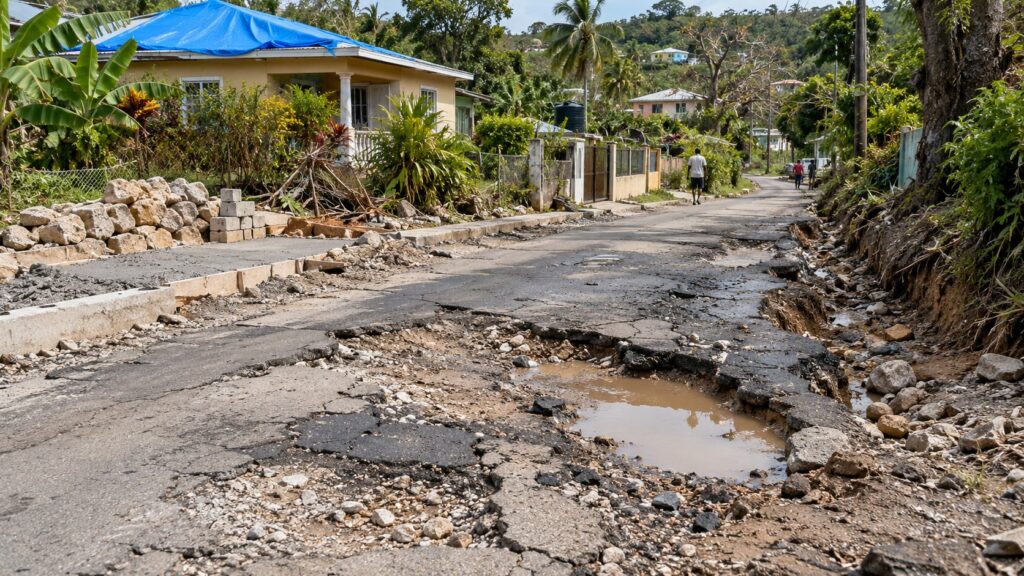
Earlier this month the Prime Minister said he is not satisfied with the pace of the recovery. The National Reconstruction and Resilience Authority, NaRRA, is supposed to speed things up. The law establishing it was passed in May 2026, and its chief executive took office on June 1. Almost a year after Melissa, the Authority is still recruiting staff and putting its systems in place. A reconstruction authority must be able to deliver at the speed the circumstances require, because families and businesses pay for every month of delay.
On September 8, the Government launched JAMRROC, the committee that will oversee NaRRA. It has promised quarterly public reports and an online platform showing what is being built, what it costs, when it will be finished and where delays arise. That is the right commitment. The test is whether an ordinary Jamaican can use it to find out when their road will be repaired or their water restored.
The same standard must apply to the money. How much of the reconstruction financing has reached contractors and suppliers? Which projects are complete? How many local businesses are operating because the work was done? JAMRROC’s first report should answer these questions.
What needs to change?
Jamaica cannot control the price of oil or the course of a war. Government can, however, fix the domestic weaknesses that make these shocks more damaging.
The first priority is to restore the capacity to produce. Reconstruction should link housing repairs with access to workplaces, farm roads with irrigation, and electricity restoration with the needs of businesses. Local contractors and suppliers need fair access to the work and prompt payment so that they can hire people and keep projects moving.
Agriculture needs investment in the years between disasters. Water harvesting, dependable irrigation, drainage, storage and practical crop insurance should be part of how farming works in Jamaica. Paying for emergency relief again and again while leaving the same weaknesses in place is an expensive way to run an economy.
Energy needs the same forward planning. Renewable generation, backed by storage and a reliable grid, would reduce our dependence on imported fuel and lower the cost of running farms, shops and factories.
The Bank of Jamaica now faces a difficult decision. Dr. Brian Langrin took office as Governor on August 19, and the Bank announces its next policy rate decision on Monday, September 28. The policy rate has been held at 5.50 per cent since February. On September 16, the US Federal Reserve raised its benchmark rate to a range of 3.75 to 4 per cent, its first increase since 2023. With US rates rising, US dollar bonds now look relatively more attractive to Jamaican investors, which adds pressure on the exchange rate and, through import prices, on inflation. If the Bank holds its rate, it risks capital moving out of Jamaican dollar assets. If it raises the rate, borrowing becomes more expensive for households and businesses that are still rebuilding. What announcement will the new Governor make?
Whatever the Bank decides, interest rates cannot repair a farm road or replant a banana field. Food prices will stay high until production recovers. Until then, the households under the most pressure need targeted support, with clear budgets and public reporting on who received it.
What does recovery mean at the market?
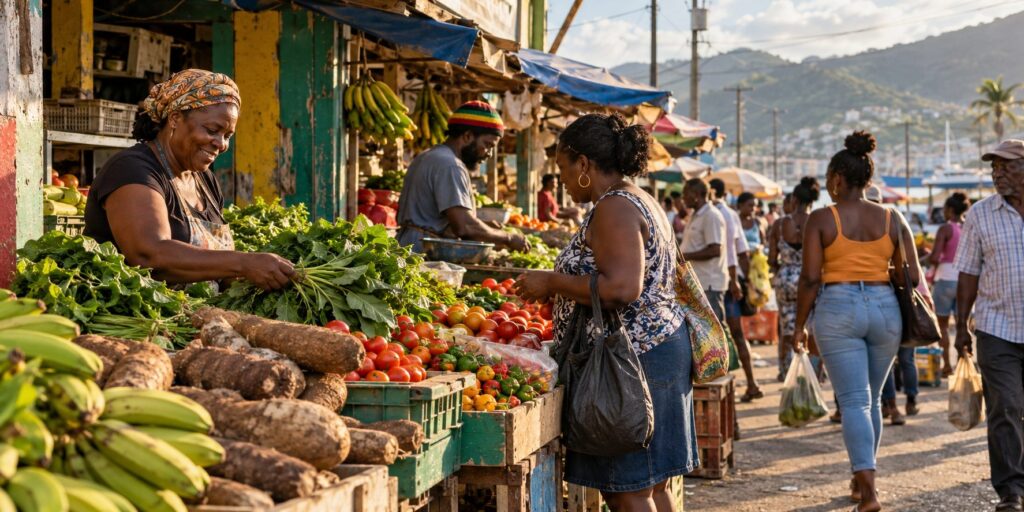
Jamaica will face more shocks. Our job is to prepare the economy to withstand them and to respond faster when they arrive. The next time I go to the market, I want recovery to mean something to the farmer who grew the potatoes, the vendor selling them and the family deciding how many it can afford. That is where economic policy must prove its value.
Which prices have hit your household hardest since Melissa? Tell me in the comments.
Andre Haughton is a Professor of Economics at the University of the West Indies (UWI), Mona, specializing in international finance, global political economy, the structural challenges facing developing economies, and development in small states. He is the author of Overcoming Productivity Challenges in Small Countries: Lessons from Jamaica and Developing Sustainable Balance of Payments in Small Countries: Lessons from Jamaica. He has been recognized as the University of the West Indies’ Most Outstanding Researcher (2017) and for the Most Outstanding Research Project (2024), was named UWI Alumnus of the Decade (1999–2009), and is an IMF Distinguished Academic Fellow. Beyond academia, he is engaged in entrepreneurship, youth development initiatives, and strategic economic thinking aimed at advancing Jamaica’s development trajectory.
Groceries and ground produce, especially fresh vegetables, at supermarket or farmers market, is where I feel it most in my pocket! Luckily, years ago, I sought to reduce my energy costs by driving a diesel fuel vehicle and investing in solar energy at home. This was not long-lived, as fuel pricing policy at the pimps made diesel fuel more costly than gasoline and the JPS credit under solar production under the netbilling arrangement is not meaningful and solar batteries were not affordable when installed solar panels. I now drive an EV, so my transportation costs are bearable. Home rentals are also hitting hard those who have to rent. Great article! Regards.
Thank you, Patrick. You have done what more households should be able to do: reduce your exposure to fuel prices by changing how you use energy. Your point on net billing is important. If the terms do not make solar and storage worthwhile for the average home, households remain tied to imported fuel and every oil shock passes straight into their bills. Energy policy has to make that switch affordable, not just possible. Rent is another pressure point, and one I will return to in a future piece.
A well researched article. I never dreamt that I would pay $1000.00 for a dozen green bananas or $1200 for a breadfruit. The cost of ground provisions is now beyond the reach of most of us.
Thank you, Clive. Those prices tell the story better than any index. PIOJ data show banana production fell 72 per cent and plantain 77.5 per cent after Melissa, and your $1,000 for a dozen green bananas is what that supply shock looks like at the stall. Until farmers can replant, and have water when drought returns, ground provisions will stay expensive. What are others paying in their parish?
I must say wonderful article Prof. Haughton. My market bill was the one that took the hit, it was so bad I took up back yard farming. It is truly disheartening to see us as Jamaicans struggling to get food when we are known to the outside world to have food fresh and ready.
However, as it relates to the objectives of JAMRROC I would urge the government to start public education early so the ordinary man can make use of the information available. As we’ve all seen the government is very much after the fact when it comes to issues affecting our country.
Thank you, Tianna. Backyard farming is a sensible response, and more households should be supported to do it. Your point on JAMRROC is well made. A reporting platform is only useful if people know it exists and understand how to read it, so public education should begin before the first quarterly report is published. It is also troubling that a country known abroad for fresh produce has families struggling to afford it at home. That gap is what the recovery has to close.
The cost of grocery items and ground produce is horrendous. Eating properly is a major challenge especially for persons without a stable source of income, pensioners and the elderly who have little or no financial support.
I tried to get a kitchen garden going, but the intense heat, drought and EXTREMELY poor water supply have resulted in wilted crops.
I marvel that persons in Kingston gets their ground provision and vegetables at a much lower cost than I, even though I live in the “bread-basket” parish.
Cynthia, thank you for sharing this. You describe what the averages hide: for pensioners and anyone without a steady income, these prices mean real hardship. It is a painful irony that produce can cost less in Kingston than in the bread-basket parish where it is grown. Much of that comes down to how produce is bought and moved, and where the buying power sits. Your experience with the garden also shows why reliable water is the foundation of everything else in agriculture.
Andre,
When I was teaching The Caribbean Economies at Mona as a Visiting Fellow — you remember that! — one of my lectures was about agriculture in Jamaica, which has the best potential of the CARICOM island economies. And one of the topics was, why the average Jamaican doesn’t go into farming? When I told the students of my experience as an adult working the soil, dirtying my hands, looking after pigs and poultry, they were surprised. And some laughed. Attention turned to why so many Jamaicans crave for imported ham and turkey when local chicken and local goat are far more wholesome (and more delicious).
As economists we know in order to encourage local production, plus productivity, the incentive to farm is profit AND profitability. Arithmetic partly explains the $400/lb. That $400 is just gross income/lb. Net income depends on a host of factors on the supply side: like crop insurance against natural disasters, transportation and storage costs, marketing, cost of fertilizer, and tax policy. Throw into the mix, interest on an agricultural loan.
The lack of demand is unlikely to be an issue as people have to eat, whilst remittances help support basic consumption levels.
So: is farming profitable in Jamaica?
Terence
Terence, of course I remember, and thank you for this. You have put your finger on the real question. The $400 is what the shopper pays, not what the farmer keeps. After hurricane losses, transport, storage, fertilizer and, as you say, the interest on a loan, many small farmers are left with very little. That is a big part of why young people don’t see farming as a business.
So is farming profitable in Jamaica? For some, yes, but it is too risky for most. That is why I keep coming back to irrigation, crop insurance and affordable credit: they turn a gamble into a business. The cost of credit is also the thread of my new article on the BOJ rate increase and who will finance the recovery.
Andre,
Thanks for your response.
I was telling some (academic) colleagues a couple days that I applaud your website and the economics coverage on “bread and butter” issues in Jamaica, all in plain highly readable English. This region needs more communicators like you to take academic economics out of the sanitised lecture halls and into the open in broad daylight. The public needs to understand economics just as we expect people to learn and understand science and maths.
Not to sound philosophical, economics is not physics; subatomic particles don’t care a hoot what is said or written about them, but economics deals with people and their livelihood, and so whilst your articles anchored in data and objective analysis are apolitical, some readers would see them as ideological. I’ve had this experience on many occasions. But I have known Andre Haughton well enough — this man used his car to haul out another stuck stuck precariously in the side of a mountain slope — to know he also doesn’t pull his punches.
I support you and your “agenda” on this excellent website!
Terence
Terence, thank you. That means a great deal coming from you. You are right that economics is about people and their livelihoods, which is exactly why it must be explained in plain language. My aim is simple: let the data lead, wherever it points, and let readers judge for themselves. I appreciate your support.