
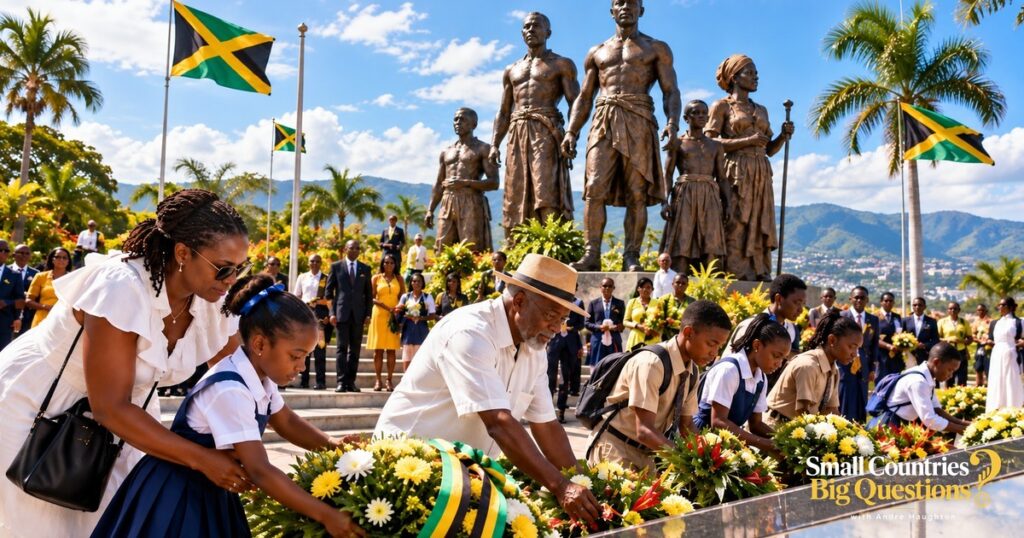
Every Heroes Weekend Jamaica celebrates its heroes and its heroine for their valiant fight against slavery and injustice, and for their role in advancing a nation of such remarkable people. Our struggle now has the backing of the world. In March the United Nations General Assembly voted the trafficking and chattel enslavement of Africans the gravest crime against humanity, by 123 votes to 3 with 52 abstentions. Britain abstained, with no intention to pay for the crime.
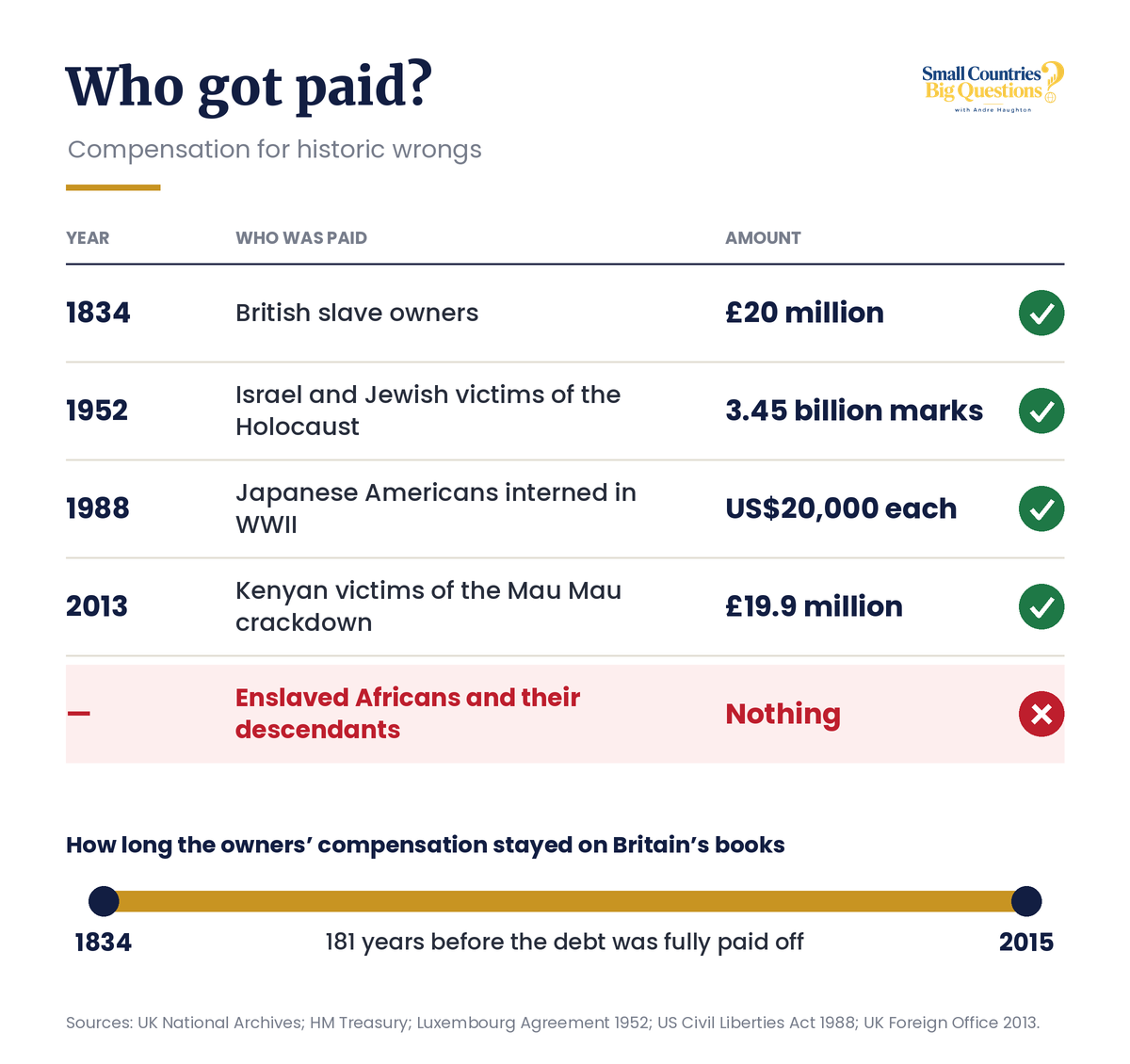
When it ended slavery in 1834, the only people Britain compensated were its own slave owners. Parliament granted them £20 million for the loss of their “property,” about 40 per cent of the government’s annual spending. Britain borrowed to pay it, and that borrowing was folded into government debt that was not fully paid off until 2015. The people who had been enslaved got no land, no tools and no capital.
Other nations who went through similar things were compensated in cash and in kind. In 1952 West Germany agreed to give Israel 3 billion marks in goods and services to resettle Jewish refugees, and a further 450 million marks for Jewish victims of the Holocaust living elsewhere. In 1988 the United States gave a formal apology and US$20,000 to each surviving Japanese American interned during the Second World War. In 2013 Britain itself paid £19.9 million to more than 5,000 Kenyans tortured during the Mau Mau uprising. The descendants of enslaved Africans in the Caribbean have received nothing. So what about us?
What is owed?
Reparation for the Caribbean should come as opportunity. CARICOM’s ten-point plan of 2014 calls for a full formal apology, debt cancellation, technology transfer, and investment in education and public health. I would add land to that list. Across the region the freed were sent out with nothing to produce with. Britain can fund land titling, scholarships in science and technology, and investment in the industries the Caribbean missed. Jamaica’s story shows why.
What did freedom come with?
Freedom came with two handicaps. The first was the absence of productive assets. The newly free were expected to earn a living without land of their own, in an economy where land was the main source of income. The second was the collapse of coordination. The plantation was a brutal system, but it was an organized one. It produced sugar at scale and fed the triangular trade that made Britain, Spain and Portugal wealthy. When the freed population left the estates, production broke into small plots farmed for survival.
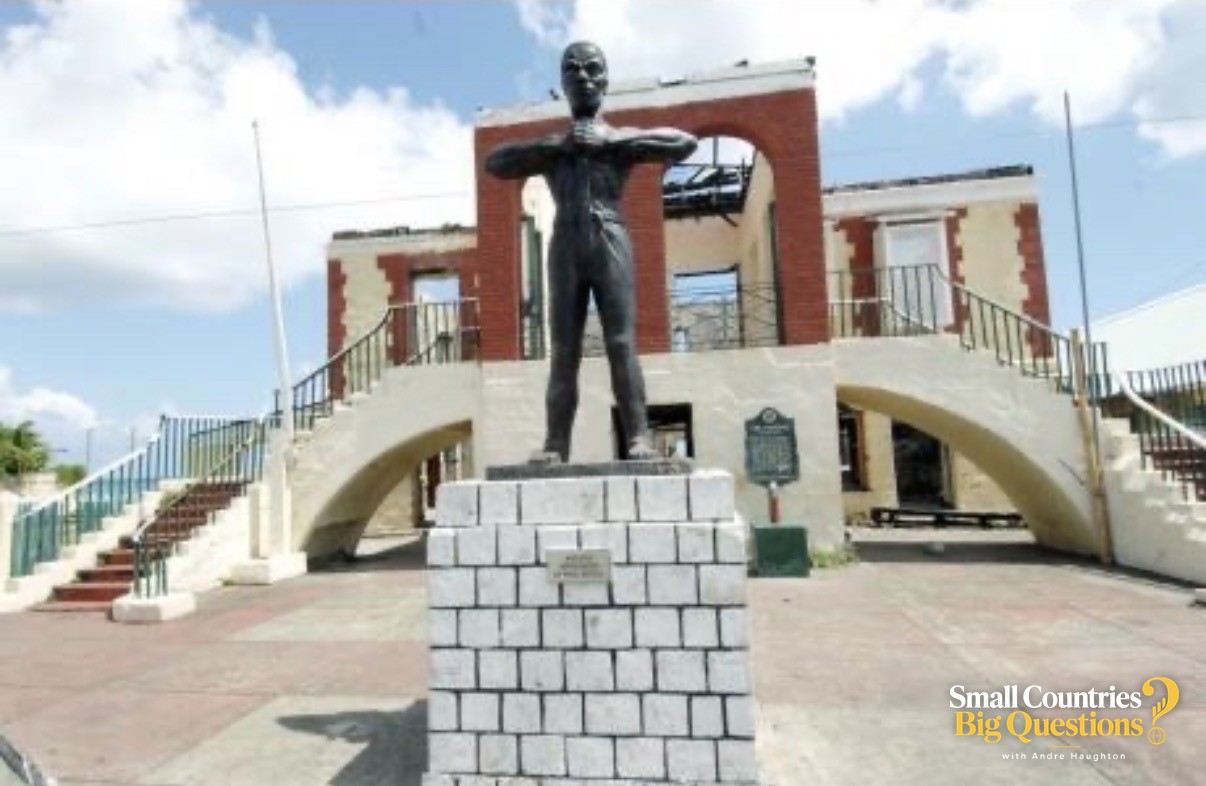
Thirty years of that produced the Morant Bay War of 1865, when Paul Bogle and his followers marched on the courthouse. Governor Eyre answered with martial law, and the Royal Commission later found that 439 people were put to death, at least 600 were flogged and 1,000 homes were burned. The discontent had been building across the island since Sam Sharpe’s war of 1831.
What has changed?
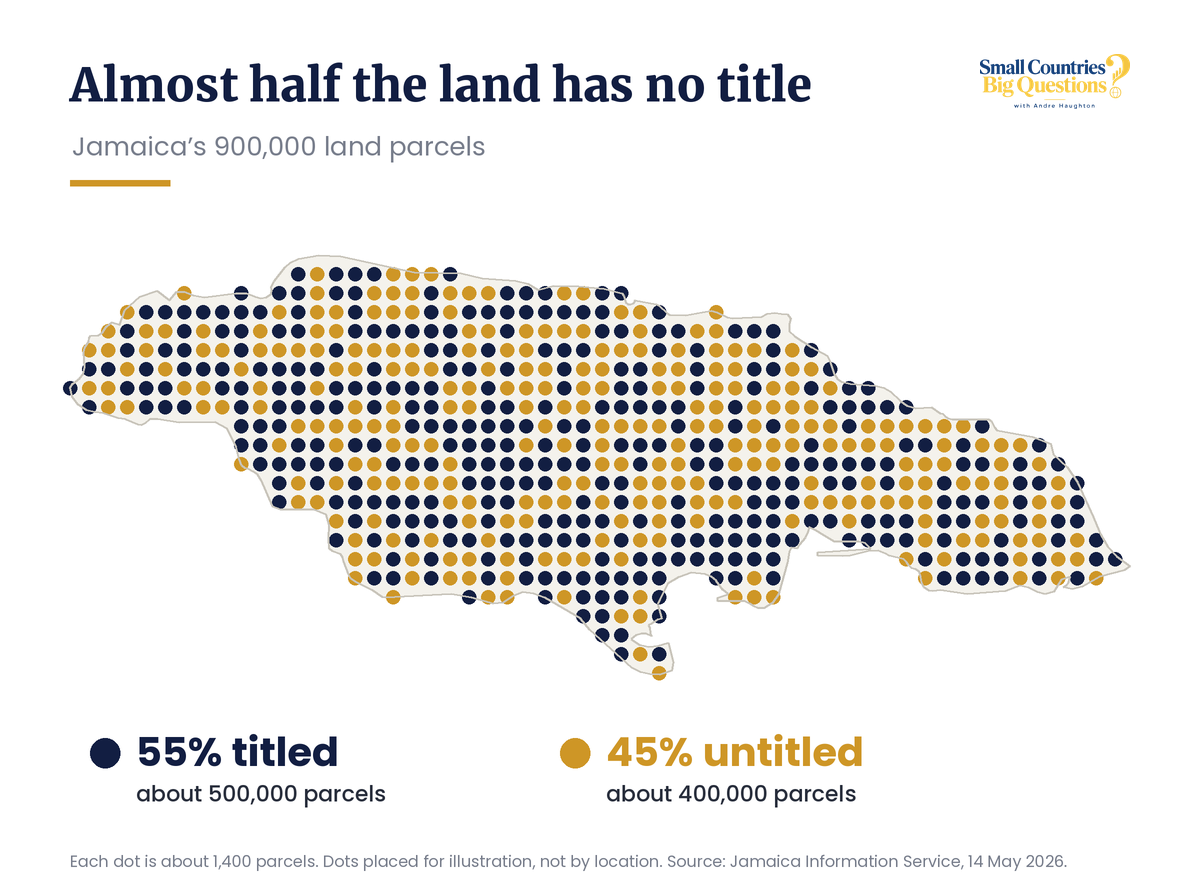
Less than we would like to admit. Jamaica has about 900,000 parcels of land, and only about 55 per cent of them are titled. That leaves roughly 400,000 parcels where families have lived, farmed and built for generations without being able to prove ownership. Untitled land cannot be mortgaged, sold easily or passed on cleanly. The Prime Minister himself called the gap between possession and title “a barrier to finance, to security, to inheritance.” Wealth that cannot be used as collateral cannot grow.
Wages are the second parallel. In July 2026 the minimum wage rose to J$17,000 a week, about US$107. A full year at that rate comes to roughly US$5,600. Jamaican people have maximum potential, and the country keeps negotiating over the minimum.
Where did Singapore go?
Singapore was also a British colony, and in 1960 it stood exactly where we stood. That year Jamaica and Singapore had almost exactly the same GDP per capita, US$424 and US$428, according to the World Bank. In 2025 Singapore’s figure was US$98,814. Jamaica’s was US$8,003.
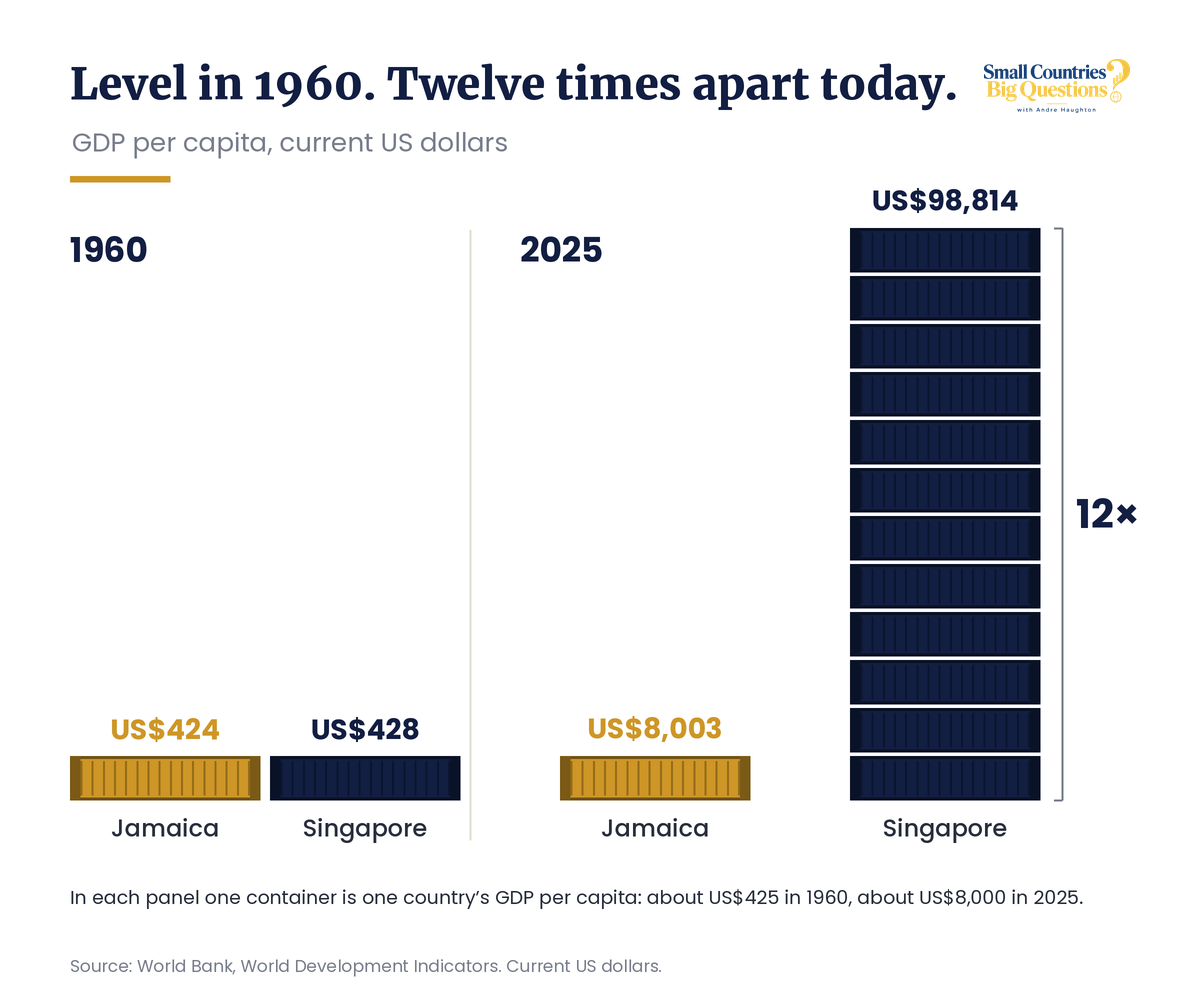
The difference was the choice of industries. Singapore rode the technology wave of the 1960s and 1970s. It trained its people to make technology goods and kept moving up the value chain. Jamaica stayed with agriculture and moved into tourism. I put it to my students this way: Singapore exports a container of microchips and Jamaica exports a container of banana chips. A container of banana chips may be worth tens of thousands of dollars. A container of microchips can be worth tens of millions. An economy built on a few exposed sectors is susceptible to external shocks, and Jamaica has paid for that exposure for fifty years.
Can Jamaica catch this wave?
Tourism can grow, and it should. The risk is letting one sector stand in for the whole economy. The luxury developments planned for the south coast may employ a few thousand people. The other two million-plus Jamaicans need high incomes too. We have seen this model before in the free zones, where owners earned supernormal profits and Jamaicans earned wages and overtime.
We missed the technology booms of the last century. Artificial intelligence is the one in front of us now. My company, Textron Technology, designed AiDiA, an AI companion teddy bear now sold on Amazon and at the UWI Mona Bookshop. It is manufactured in China, but it was designed in Jamaica and Textron owns the design, so the intellectual property stays here.
What would justice look like?
Economics teaches scarcity and the non-satiation of wants, the principle that more is always preferred to less. Applied without balance, it rewards consumption and individual accumulation. Our own philosophical inheritance, from the sages of ancient Kemet to the Ubuntu idea that I am because we are, puts the community first. Emancipation should have given our people the means to produce. Reparation for the Caribbean in land, education and technology can still do it. Until Jamaica moves from consuming to producing, and gives its people title to the assets they already use, Bogle’s march remains unfinished business.
What should reparation for the Caribbean look like? Tell me in the comments.
Andre Haughton is a Professor of Economics at the University of the West Indies (UWI), Mona, specializing in international finance, global political economy, the structural challenges facing developing economies, and development in small states. He is the author of Overcoming Productivity Challenges in Small Countries: Lessons from Jamaica and Developing Sustainable Balance of Payments in Small Countries: Lessons from Jamaica. He has been recognized as the University of the West Indies’ Most Outstanding Researcher (2017) and for the Most Outstanding Research Project (2024), was named UWI Alumnus of the Decade (1999–2009), and is an IMF Distinguished Academic Fellow. Beyond academia, he is engaged in entrepreneurship, youth development initiatives, and strategic economic thinking aimed at advancing Jamaica’s development trajectory.
Sources: UN General Assembly vote, 25 March 2026 · The National Archives (UK), NDO 4 and T 71 series · UCL Centre for the Study of the Legacies of British Slavery · HM Treasury, Freedom of Information release, February 2018 · Luxembourg Agreement, 1952 · US Civil Liberties Act, 1988 · UK Foreign Secretary’s statement to the House of Commons, 6 June 2013 · CARICOM Reparations Commission, 2014 · Jamaica Royal Commission report, 1866 · Jamaica Information Service, 14 May and 24 March 2026 · World Bank, World Development Indicators
Reparations from Britain in land, education and technology for Jamaica now!
Angie, those are practical priorities. Land, education and technology can expand what people are able to earn and build over time. The design matters too: who gains access, how decisions are made and how the public can track results. Which of those three would you prioritise first, and why?
I absolutely agree with you professor, this conversation of repatriation is a very important one. Our people were left crippled and underequiped to survive in the world outside of the plantation. That affected not only our actions but our mindsets. If you ask statin to do a survey today, I am certain it will confirm that a high percentage of our population has to start from scratch today just as they did after slavery ended. This is because our nation hasn’t truly evolved, it has just bearly survived. We are a national of potential and procrastination. We have the ability but always choose the safe way, or the quick way.. We rearly choose to invest in a solid foundation for ourselves here in our home country. We rather take that energy abroad and do what we would never even fathom to do here, while building other’s economies and neglecting our own. So yes we are still marching, the difference thou is that us today have no idea what we are marching for. That is why Britain has played in our face because slavery divided us and let us devalue our unity and we have rode that wave. Focusing on only ourselves as individuals instead of learning from the sacrifices of our ancestors and building upon the foundation they created leading our country to the right path as a unified nation. Only when we present that image and change our mindset, will Britian even consider us worthy of any compensation. Remember we were labeled as the place where the trouble ones are sent..they dont value us because we dont value ourselves.
Atavia, unity and investment in our communities matter. But the case for repair should not depend on proving that we are a deserving people. The practical question is how resources would expand opportunities across generations, with clear oversight of how they are used. Would you put education, access to land or support for productive businesses first?
As I said on Instagram, slavery was not a “crime”. Whether or not you think it was just is irrelevant when discussing compensation through legal channels.
1. Jamaica is in receipt of millions in USAID and UKAID among several other grants, concessions and opportunities from the perceived enslavers for decades with nothing to show for it.
2. The legality of what you are requesting has no available/plausible vehicle at this stage that would ONLY benefit “slave descendants” while ONLY charging “slave owners”. More specifically, if you took compensation from the IS/UK govt, they would simply tax their citizens to raise that money, many of whom are slave descendants.
3. How will you measure compensation? If Jamaicans are descendants of slave owners AND “colonizers” do they get “half”? “Quarter”? Are successful Jamaicans entitled to the same compensation as the homeless?
4. Do you trust the government to evenly apply such compensation without politicians benefitting their friends disproportionately?
5. British plantation owners bought slaves from West African enslavers. Are we pursuing “the white man” or “the enslaver”, and if it is the latter, how do we determine a suitable way to calculate what is owed from criminals who are long dead to victims who have long passed?
You raise questions about eligibility and accountability that any serious reparations proposal must answer. My argument is for investment that addresses lasting damage through education, access to productive assets and stronger institutions. Aid received over the years does not, by itself, answer that argument. The legal basis and the design of any settlement require separate examination. What safeguards would you consider necessary to prevent political capture of such a programme?