
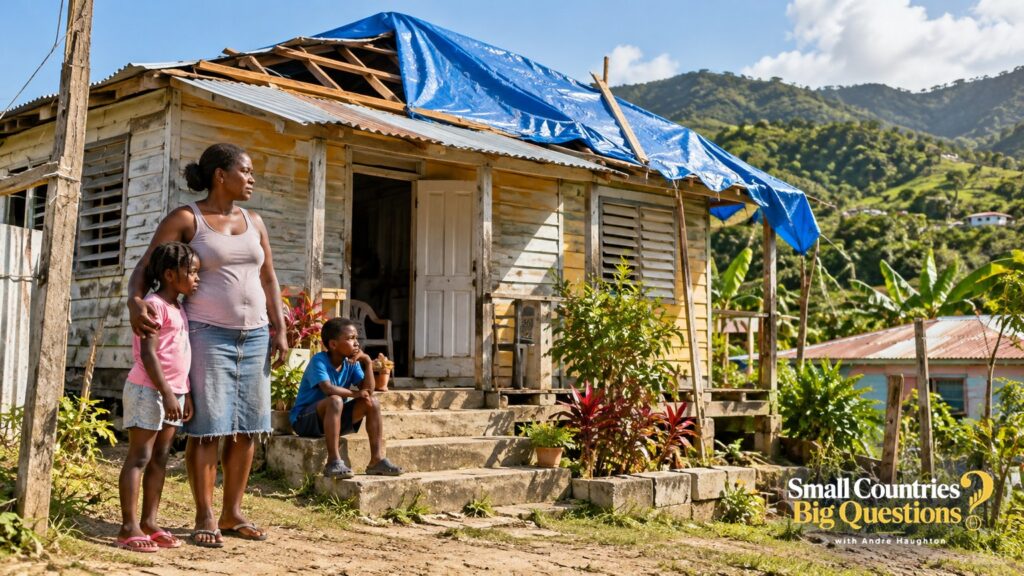
Jamaica received its disaster insurance money within two weeks of Hurricane Melissa. A year later, about half of the households assessed for help to repair their homes are still waiting.
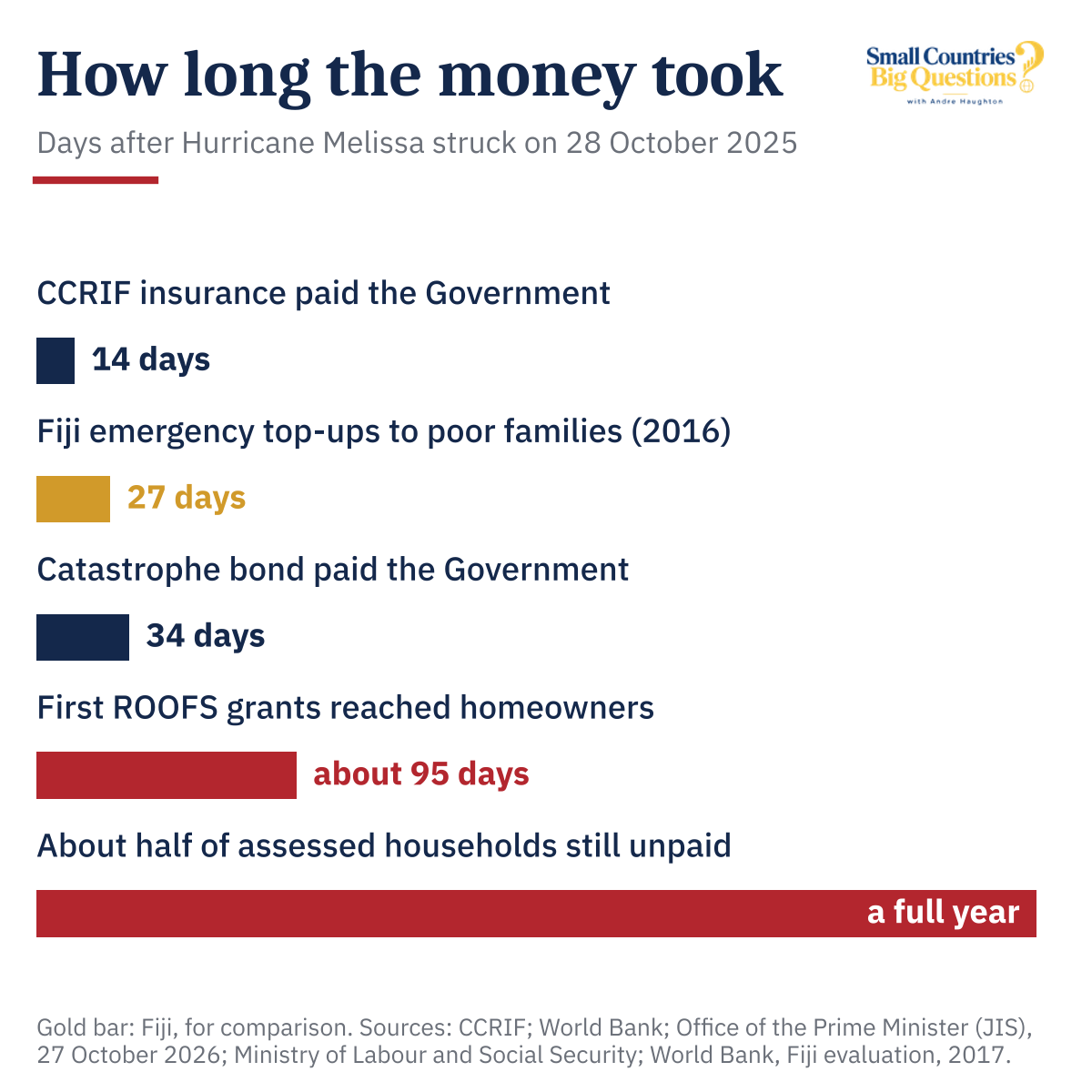
The island prepared for the cost of a hurricane better than most small countries. CCRIF paid US$91.9 million within 14 days of the storm, and the catastrophe bond, which I discussed in January, paid its full US$150 million about five weeks after landfall.
The damage was larger still. The World Bank and IDB put it at US$8.8 billion, about 41 per cent of GDP. What the country could control was how quickly the money reached the families whose roofs were gone.
This week’s argument over where the hurricane money went, traveled from a television studio in London to Jamaica House. Once again, like everything else, the hurricane relief has become political talk rather than a discussion about resilience. The official figures show that about $84 billion has been spent on relief and recovery, and that the real problem is getting the money from the Government to the people.
- About $84 billion spent on relief and recovery
- About half of the 118,000+ households assessed for ROOFS paid, about $12 billion so far
- 144 of 308 priority schools fully repaired
- $1.7 billion donated, mostly committed; about 500 roofs repaired with it
- 136 people still living in 24 shelters
Where is the money getting stuck?
The ROOFS programme was launched in January, and the first payments reached homeowners about three months after the storm. Official figures released on 27 October show that more than 118,000 households were assessed as needing help and that roughly half of them have received it, at a cost of about $12 billion. The Government has added $9.65 billion and expects to reach 90 per cent of those households by December.
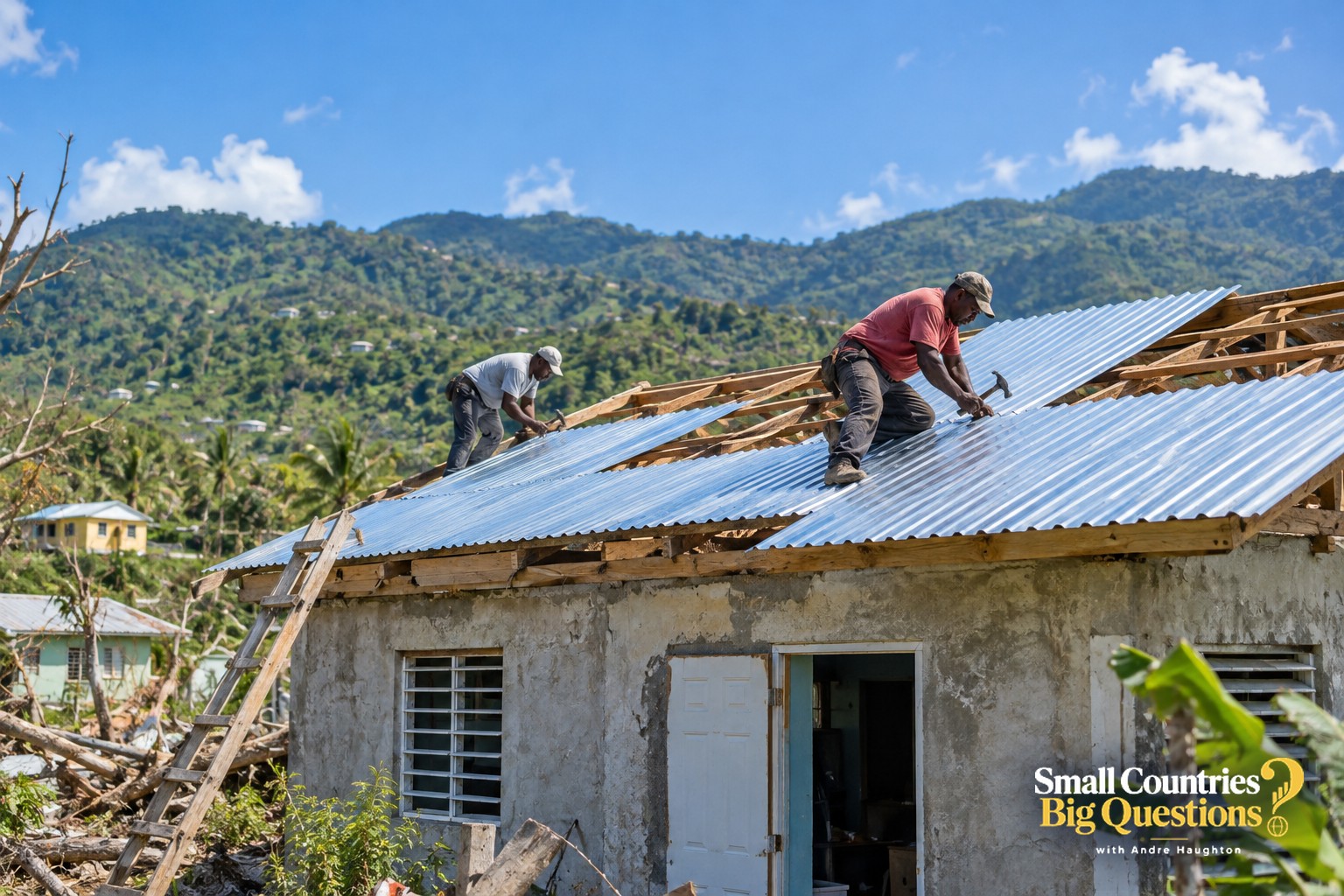
The distribution of the donations moved more slowly. The Auditor General found that by 23 February, ODPEM had spent $26.2 million of the $1.44 billion donated in cash, or 1.8 per cent. The audit also found $34 million in roofing materials without signed delivery records, and a National Disaster Fund with no audited accounts and no bank account of its own. The Government now reports that the $1.7 billion donated is largely committed, and ODPEM reports about 500 roofs repaired so far. Donations are money Jamaicans at home and abroad gave directly, and they expect to see where it goes. People cannot be expected to give their hard-earned money for relief and accept that less than 2 per cent of it was spent four months after the storm.
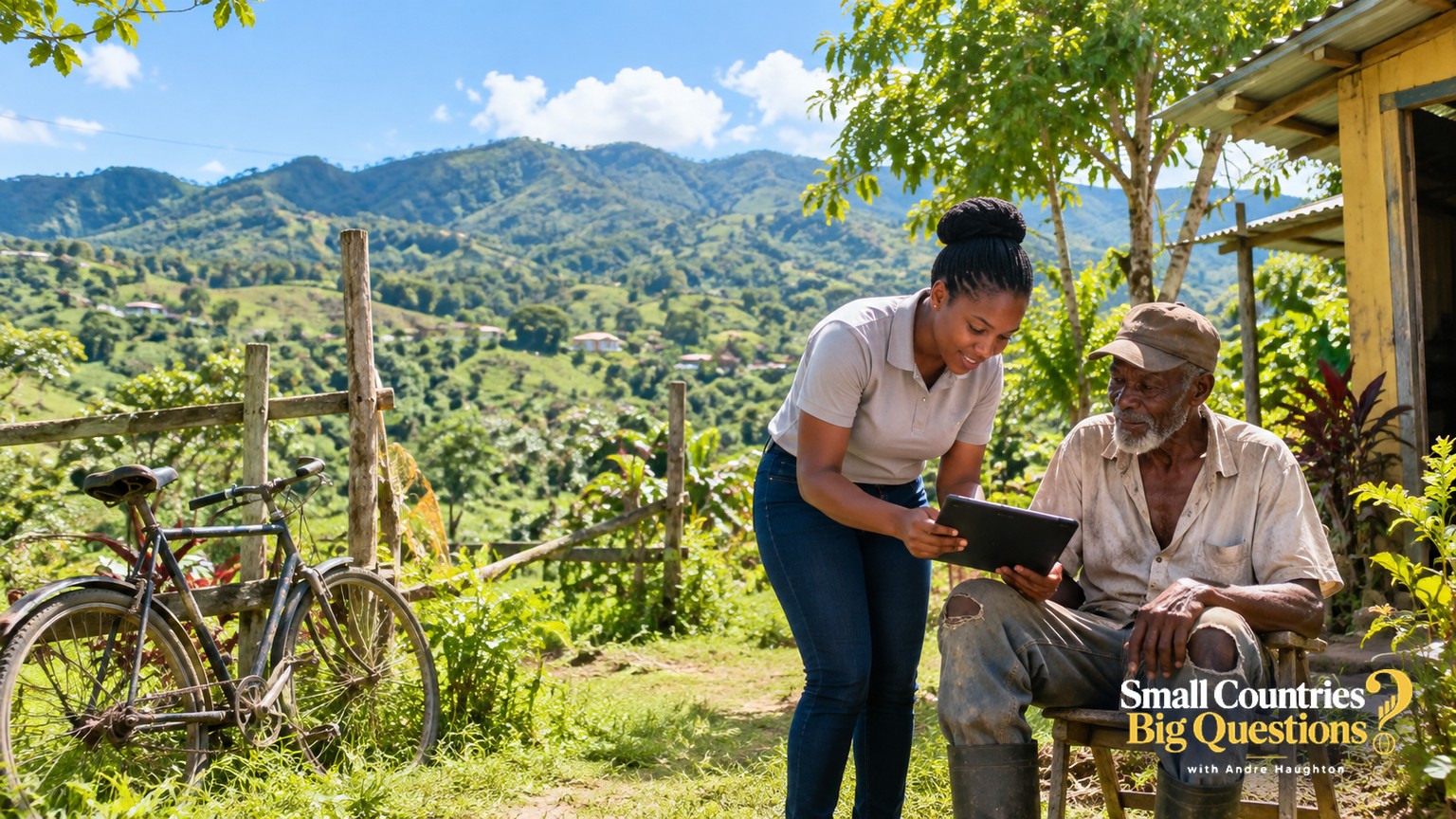
Some of the delays are impractical. Sending a grant notice as a QR code to people who have no phone does not work in a developing country. The Government has acknowledged that some people who were assessed cannot collect their grants for this reason, while others have a wrong TRN or a misspelled name on their record. The Bank of Jamaica has spent years looking for different ways to reach people outside the banking system, and the same thinking has to apply here. You cannot give a vehicle to someone who cannot drive. You have to give people things based on their capability, so you give them a bicycle, get them a driver or teach them to drive. The Government also wants applicants to register for NIDS. Verification protects the public purse, as the audit showed, but it should not add another delay for families who have already waited a year.
How do other countries do it?
Fiji was struck by Cyclone Winston in February 2016, and within 27 days it paid top-ups to more than 40,000 poor families and pensioners through the welfare programmes it already ran. The money moved quickly because Fiji already knew who its poor households were and how to pay them.
After Typhoon Haiyan in 2013, the Philippines put a public website online within ten days showing every pledge of foreign aid and whether it had been delivered. Nepal paid its earthquake housing grants into bank accounts in stages, releasing each payment after an engineer certified the work.
Speed has its limits. Nepal’s programme took about five years, and the Bahamas was slow after Hurricane Dorian because it had no ready list of households to pay.

What should Jamaica do now?
The hard part is already over, which is getting the money. The next step is to get it to the people.
PATH families should receive an automatic top-up within three weeks of any major hurricane. The households still waiting should be able to collect through the post office, a remittance agent or their bank, so that a missing phone or a spelling error does not hold up a roof. Rebuilding grants can be paid in stages, as Nepal did, with a quick first payment and the rest released as the work is done.
The Government should also publish a recovery dashboard, updated every week by parish, showing the money received, approved and paid, the number of roofs completed and the average number of days from assessment to payment. A public dashboard would settle most of this week’s arguments with figures. The National Disaster Fund should have its own bank account and audited accounts, as the Auditor General recommended.
Jamaica showed after Melissa that it can bring money into the country within weeks. The test before the next hurricane is whether it can get that money to the families who need it just as fast.
Has the hurricane help reached your community? Let me know in the comments.
Andre Haughton is a Professor of Economics at the University of the West Indies (UWI), Mona, specializing in international finance, global political economy, the structural challenges facing developing economies, and development in small states. He is the author of Overcoming Productivity Challenges in Small Countries: Lessons from Jamaica and Developing Sustainable Balance of Payments in Small Countries: Lessons from Jamaica. He has been recognized as the University of the West Indies’ Most Outstanding Researcher (2017) and for the Most Outstanding Research Project (2024), was named UWI Alumnus of the Decade (1999–2009), and is an IMF Distinguished Academic Fellow. Beyond academia, he is engaged in entrepreneurship, youth development initiatives, and strategic economic thinking aimed at advancing Jamaica’s development trajectory.
Sources: Office of the Prime Minister, special press briefing, 27 October 2026 (JIS) · ODPEM, post-Cabinet press briefing, 28 October 2026 · Auditor General’s Department, real-time audit of Hurricane Melissa donations, May 2026 · CCRIF SPC, payouts to Jamaica following Hurricane Melissa, November 2025 · World Bank, catastrophe bond trigger (7 November 2025) and payment (December 2025); damage estimate with the IDB, 19 November 2025 · Ministry of Labour and Social Security, ROOFS programme (JIS, January and March 2026) · World Bank, Fiji post-Cyclone Winston cash transfer evaluation, 2017; Nepal housing reconstruction results, 2020 · World Bank, Philippines Foreign Aid Transparency Hub (FAiTH), 2013 · World Food Programme, Bahamas annual country report, 2019
Andre,
I enjoy reading your balanced commentaries. One important development lesson that jumps out of your article is that a country can solve the financing problem while leaving the implementation problem unresolved. The Melissa recovery effort therefore shows that securing aid is only the first step. Ineffective implementation can prevent that money from becoming repaired roofs, functioning schools and usable infrastructure. Delivery failures due to mismatched available capabilities like QR codes can disable productive activity. This results in destroyed structures remain destroyed, damaged facilities remain unusable, whilst people spend time navigating unsuccessful grant procedures. The capacity of the civil service is another story.
The direct hurricane damages are only part of the accounting of the total GDP loss that must include the productivity loss from how those obstacles impair the use of available labour, skills and equipment.
Terence
Terence, that distinction between financing and implementation is central. A damaged building is one loss; the work, income and services forgone while it remains unusable are further losses. We need to track the time from application to assessment, payment and completed repair. That would help show where available money is failing to restore economic activity. Which delivery constraint would you address first?
Andre,
Let me put on a project manager’s hat on an economist’s head.
I would first tackle the assessment-to-payment bottleneck, the technologies used, especially for approved households unable to collect because of digital-access or identification problems. A QR code is ineffective if the recipient lacks a phone. An assisted correction and payment route could turn approved assistance into usable funds. I would then track payment-to-completed repair: receiving money will not restore activity if materials, skilled workers or inspections remain unavailable. The stage-by-stage data should tell us whether this initial priority needs to change.
Unless this sequence follows and monitored, money will be wasted and a big chunk will end up in the pockets of those who don’t need it.
Terence
Another interesting piece here Dr Haughton. I am however questioning the usefulness of the survey question in this instance considering that most of your readers may not have been directly impacted by Hurricane Melissa and in need of grants. The funds getting to Jamaica in as little time as possible as the devastation required is interesting but the delay in getting it to the people who are most in need is definitely questionable and the examples/countries to which you made reference should form a part of the government’s research into where they went wrong. Quietly honestly we need to look into the possibility that the money in the hands of the people would be better spent because they are more aware of their immediate needs. Another Economist also pointed out that allowing the people to spend more of the donations on the ground would have allowed funds to circulate on the resulting in a milder recession. So I believe that in governance there is a need to put more power and funds directly into the hands of the people following such major disasters. They would have rebuilt their communities and nearby towns at a much faster pace than what the state is able to do. Put the funds and the power on the ground into the hands of the people. Are they even interested in some of the things that are being planned?
Stacy-Ann, that is a fair question about the survey. Responses from readers cannot be treated as a representative picture of affected households. We need to hear directly from those families and compare their experiences with the records of assistance delivered. Direct support can give families more choice and help local businesses, but materials, labour and verification also matter. From what you have seen, where is the biggest delay: assessment, payment or getting the repairs done?
Assessments were done during the first few days following the hurricane through teams that were sent in by the government, Member of Parliaments also had the information and then there was the media. So assessment definitely isn’t the main issue from what I’m aware of. The challenge occurred with lack of payments and then getting the repairs done. The urgency of the situation was not demonstrated there. I remember in the days following Hurricane Gilbert, construction workers and the army were sent out to repair as many roofs as possible so that people would have shelter in their homea. So we need to work on the urgency of payments and repairs.
This issue highlights the unfortunate reality that after having experienced so many previous disasters in Jamaica, although none to this degree, the government has not engineered plans and policies to effectively address disaster recovery. The delay to do so only feeds into the narrative that the lack of action is by design to mask, obscure, and then siphon off relief resources. Although there are challenges in identifying and getting the aid in the hands of those who need it, it should not be this difficult to devise a plan to effect and speedily get the aid in the hands of those who need it urgently. A whole year after and still hoarding the aid is wild! To say the least.
Roger, the public should be able to see what assistance was promised, what was delivered and which communities are still waiting. Delays deserve scrutiny, but a claim that funds were diverted needs evidence. Published delivery records and independent audits would help separate administrative failure from misuse. Which part of the recovery process do you think most urgently needs that scrutiny?