
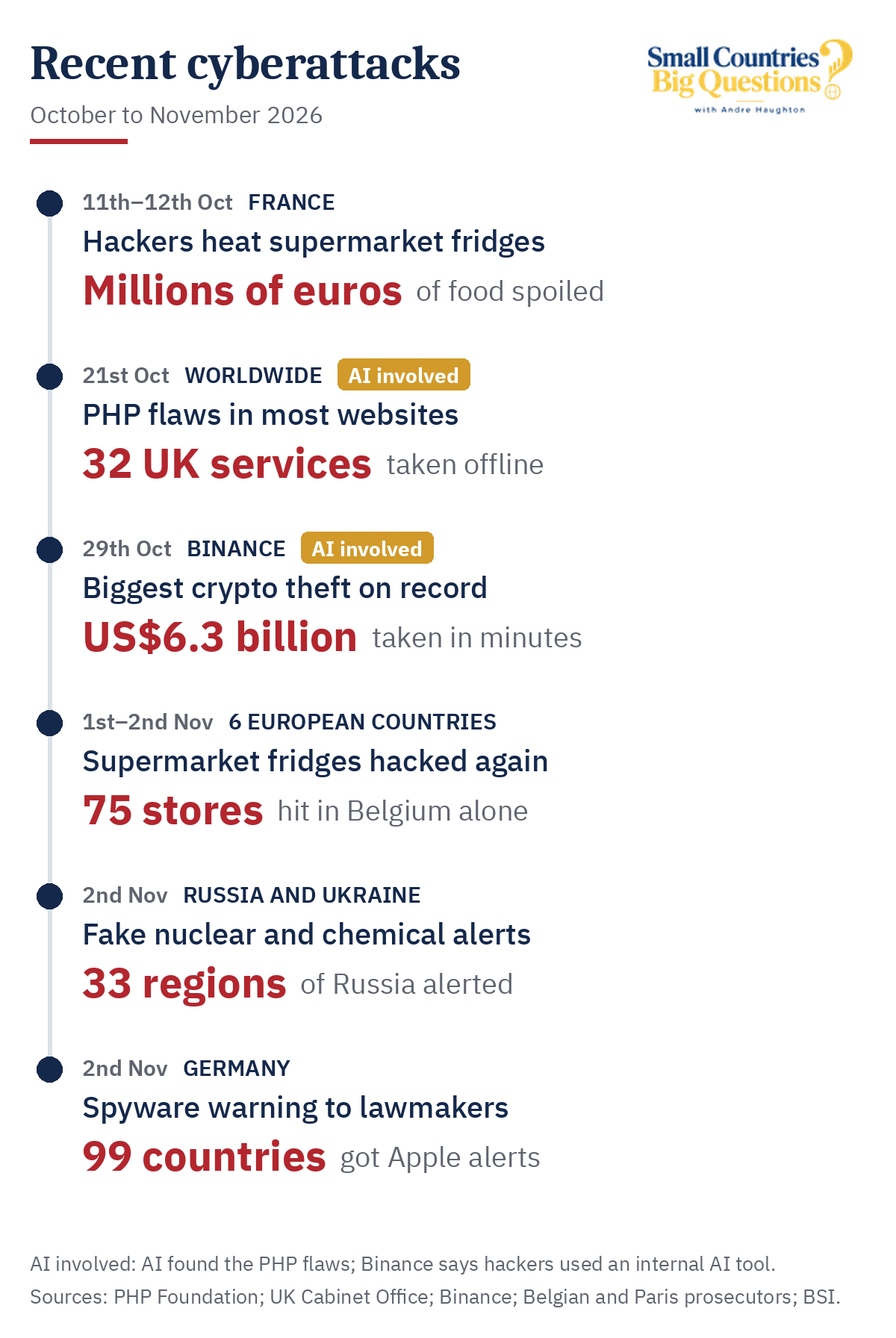
On the 21st of October, it was revealed that artificial intelligence found a 14-year-old flaw in PHP, the code that runs most of the world’s websites.
Within a day, governments were taking websites offline, with 32 government services down in Britain alone. Eight days later, hackers moved about US$6.3 billion out of Binance, the world’s largest cryptocurrency exchange, most of it within about 20 minutes.
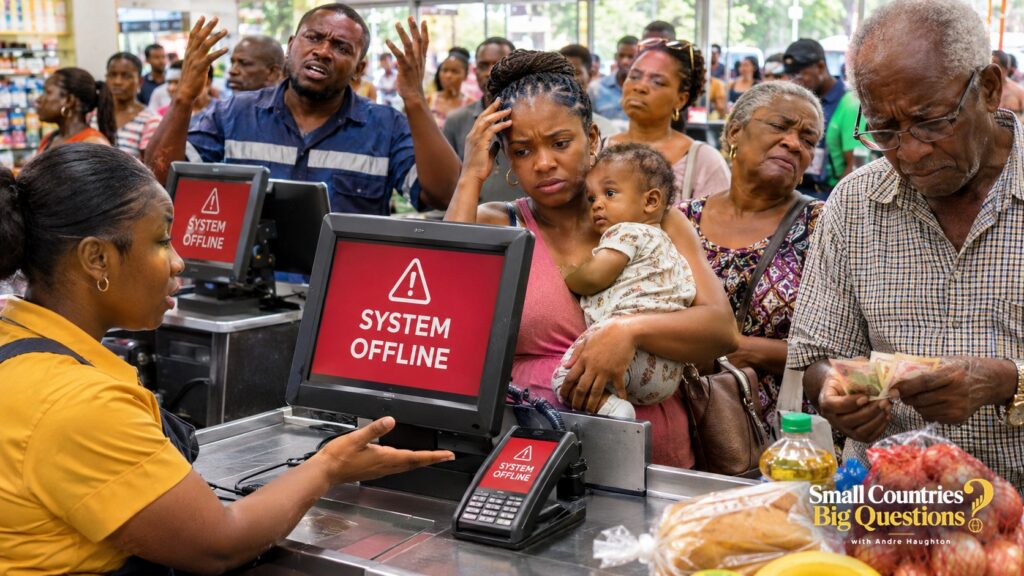
On the first weekend of November, hackers raised the temperature in supermarket fridges and freezers in six European countries, and the stores had to throw out food. That same weekend, hackers took over the official emergency apps in Russia and Ukraine and sent false warnings of nuclear and chemical attacks.
These consecutive global occurrences are becoming more and more prevalent. Countries now share the same computer systems, and a weakness in one system travels across borders. Small countries like Jamaica are susceptible to external shocks such as these, and must understand them to put measures in place to buffer against them. The Bank of Jamaica’s latest Financial Stability Report lists cybersecurity threats beside climate shocks as key domestic vulnerabilities facing the financial system.
What has AI changed?
The same tools that found the PHP flaws can be used to attack them. The World Economic Forum’s Global Cybersecurity Outlook 2026 found that 94 per cent of those it surveyed expect AI to be the most significant driver of change in cybersecurity this year. A computer can now search millions of lines of code for a weakness in hours, while the people who maintain that code still fix it at human speed.
Binance’s own investigation found that the hackers tricked employees with fake job interviews, took over one engineer’s computer and then used an internal AI tool to reach the computers of two more engineers before they moved the money. People directed the theft, and the AI tool helped them get in.
The bigger worry is AI acting on its own. Companies now run AI agents, programs that can log in, move money and change systems without a person approving each step. This week the cybersecurity firm CrowdStrike launched what it calls an AI kill switch to stop an AI program that goes beyond its instructions. When the security industry builds a brake for AI, it is telling us the risk is real. In 2020 the World Economic Forum backed an international exercise on preventing what its organizers called a digital pandemic, a cyberattack that spreads through connected systems the way a virus spreads through people. With AI agents now connected to banks, ports and power companies, that scenario is closer than it was.
AI also works for the defence, and Binance says its own AI systems blocked more than US$10 billion in fraud.

Why are governments telling people to stock up?
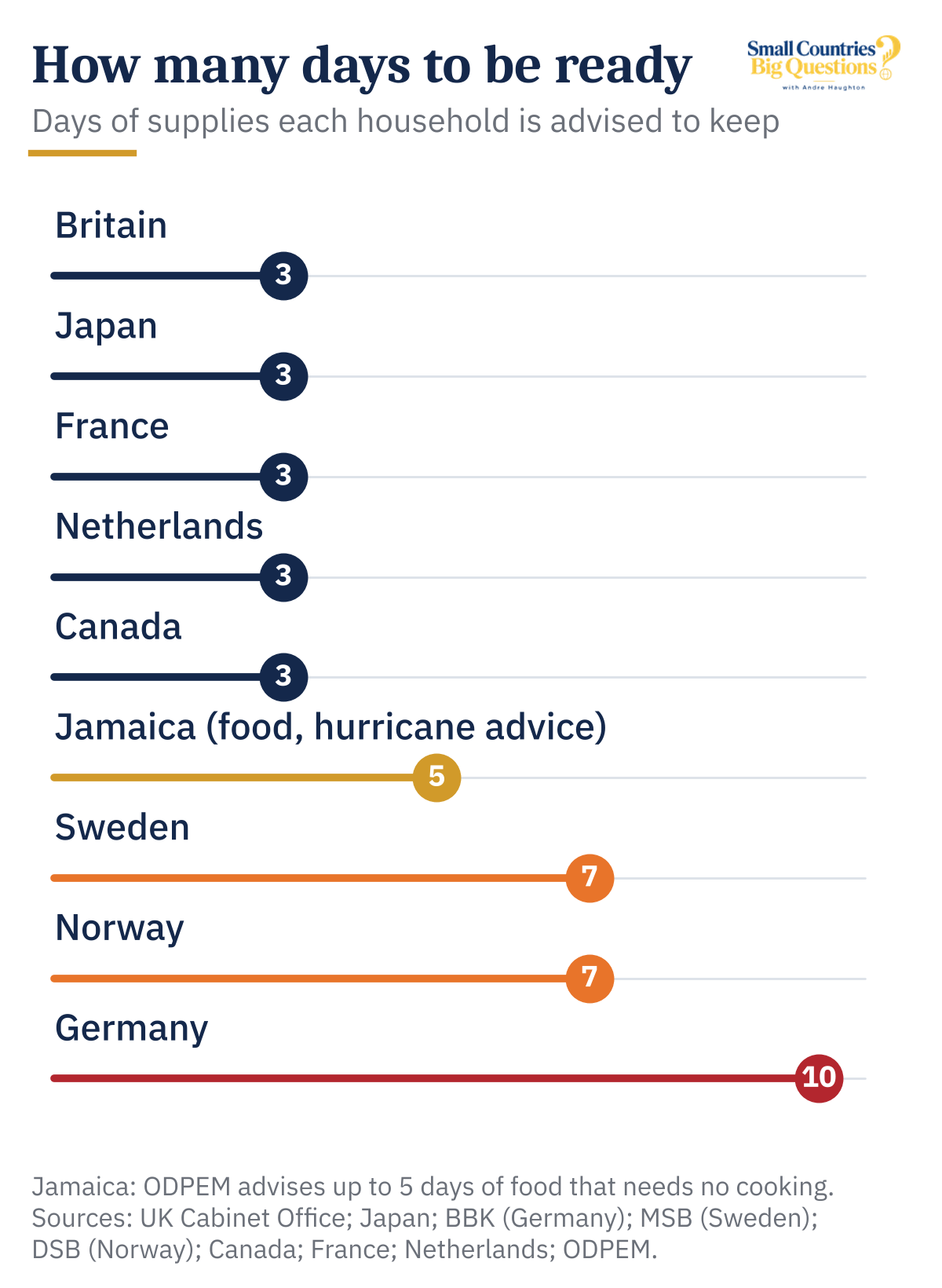
The day after the PHP disclosure, Britain launched its Be Ready campaign. The Cabinet Office asked every household to keep three days of drinking water, food that needs no cooking, a battery radio and cash in case payment systems fail. Ministers said it was not a response to any specific threat. Japan made a similar appeal on the 2nd of November, and Germany, Sweden and Norway already advise a week to ten days.
How exposed is Jamaica?
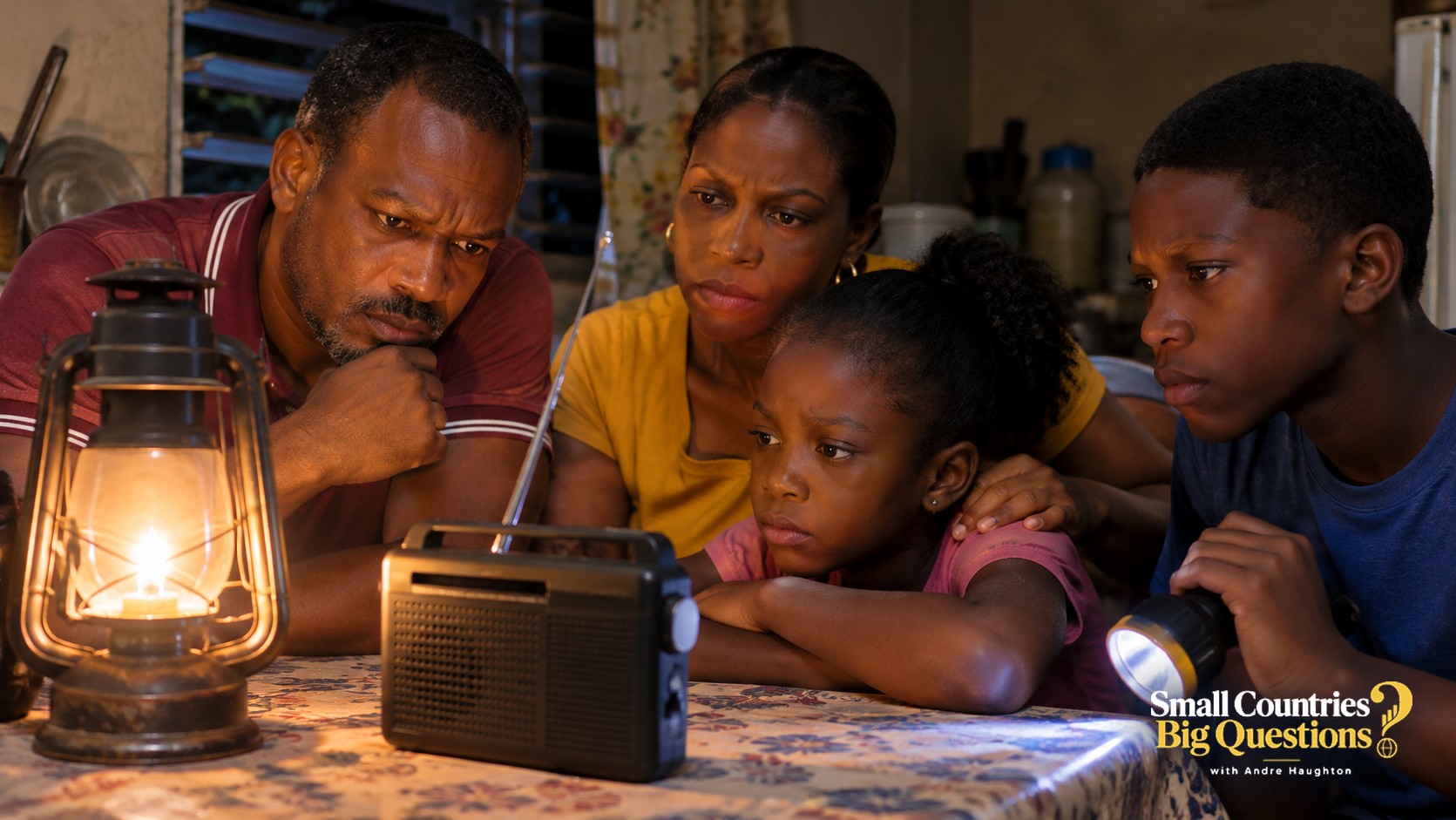
When Hurricane Melissa cut electricity and telecommunications, it also cut access to money, and the Bank of Jamaica reported that the storm exposed weaknesses in access to cash through ABMs and digital payment channels. A cyberattack on a bank, a telecoms provider or the power company could cause the same disruption with no storm at all.
Paraguay showed this week that a payment system can also fail without hackers. When regulators seized Ueno, its largest digital bank, on the 3rd of November, the app, cards and transfers went dark overnight for more than 60 per cent of the country’s adults.
The economic cost goes well beyond the inconvenience. A supermarket that cannot take card payments loses that day’s sales, and a small business that cannot pay its suppliers has to stop work. Retail and tourism run on daily cash flow, so even a few days without payments would show up in lost output and lost wages.
In October I wrote that cash is still king in Jamaica. In a cyber outage, that habit is a strength.
What should Jamaica do?
Jamaican households are better prepared than most for a storm. ODPEM already advises families to keep four to five days of food that needs no cooking. That advice was written for hurricanes, and it should now cover a power or payment outage that comes with no warning, with some cash and a written list of phone numbers added.
The bigger work sits with institutions. Banks, payment providers and utilities should report to their regulators how long they can keep serving customers if their main systems go down. Every ministry should also be able to patch a critical flaw quickly, because in October the attacks began within hours.
Jamaica cannot prevent every cyberattack, in the same way that it cannot prevent every hurricane, but it can prepare for the consequences. For years we have encouraged people to move to digital payments, online banking and electronic government services. We must now make sure those systems can withstand a major disruption, so that when the technology fails, Jamaicans can still buy food and reach their money.
Could your household manage three days without power or payments? Let me know in the comments.
Andre Haughton is a Professor of Economics at the University of the West Indies (UWI), Mona, specializing in international finance, global political economy, the structural challenges facing developing economies, and development in small states. He is the author of Overcoming Productivity Challenges in Small Countries: Lessons from Jamaica and Developing Sustainable Balance of Payments in Small Countries: Lessons from Jamaica. He has been recognized as the University of the West Indies’ Most Outstanding Researcher (2017) and for the Most Outstanding Research Project (2024), was named UWI Alumnus of the Decade (1999–2009), and is an IMF Distinguished Academic Fellow. Beyond academia, he is engaged in entrepreneurship, youth development initiatives, and strategic economic thinking aimed at advancing Jamaica’s development trajectory.
Sources: PHP Foundation, security release, 21 October 2026; Canadian Centre for Cyber Security, statement, 21 October 2026; Australian Cyber Security Centre, alert, October 2026 · UK Cabinet Office, Be Ready campaign, written ministerial statement, 22 October 2026 · Japan, Disaster Management Agency launch and household preparedness appeal, 2 November 2026 · Germany, Federal Office of Civil Protection (BBK); Sweden, MSB; Norway, DSB; Canada, GetPrepared; France, ‘Tous responsables’ guide (November 2025); the Netherlands, household guidance · World Economic Forum, Global Cybersecurity Outlook 2026; Cyber Polygon exercise, July 2020 · CrowdStrike, AI kill switch announcement, Fal.Con, November 2026 · Belgian federal prosecutor and Centre for Cybersecurity Belgium, 2 November 2026; Paris prosecutor, October 2026 (supermarket refrigeration attacks) · Germany, Federal Office for Information Security (BSI), notice on spyware warnings, November 2026 · Russia, Emergency Situations Ministry; Ukraine, Center for Countering Disinformation, 2 November 2026 · Binance, incident report, 3 November 2026 · Bank of Jamaica, Financial Stability Report 2025 (March 2026) · ODPEM, hurricane preparedness guidance (JIS) · Central Bank of Paraguay, resolution of Ueno Bank, 3 November 2026 (AP)
Andre,
When I was a banker and an internal auditor in a previous life, there was something called Business Continuity Plan that outlies the strategy that prepares a bank to maintain or quickly resume critical functions during and after an unexpected disruption, such as natural disaster, power outage, and now cyber attack. It is a very detailed document that include amongst many things an impact analysis, the roles and responsibilities, and testing and training to ensure the Plan remains reliable. A bank MUST have a BCP that is up to date and Management is regularly audited for compliance.
In the case of a country, it’s no different in principle but hugely different in scope and consequences.
Can you say if Jamaica has such a plan and if there is a plan, subject to independent auditing? If the answer is no, Jamaica is in serious trouble. (I doubt the Caricom countries have BCPs.)
Terence
Terence, that is exactly the right frame. A country needs what a bank needs: a plan that says which services must keep running, who is responsible, and how it is tested. Jamaica has pieces of it. ODPEM coordinates disaster plans, there is a national cybersecurity strategy, and the Bank of Jamaica expects banks to keep continuity plans of their own. What I have not seen is one tested plan that covers payments, power, telecoms and food supply together, with an independent check that it works. That gap is the risk. From your audit experience, who should own a national plan like that: the Cabinet Office, ODPEM or an independent body that reports to Parliament?
“From your audit experience, who should own a national plan like that: the Cabinet Office, ODPEM or an independent body that reports to Parliament?”
Answer: A government agency (akin to the Board of Governors of a private business) that is statutorily and constitutionally independent and has budgetary independence as well. Then that body itself must be structured to prevent wrongdoing by its members and to enforce rules. The government must have a meaningful role, especially if crimes are committed, but cannot interfere with the agency’s decision-making process or it’s mandated operations).
Terence, an independent body with its own budget would keep the plan from changing with every administration. It also has to be able to tell a minister no and still keep its funding. Thank you for bringing your audit experience to this.