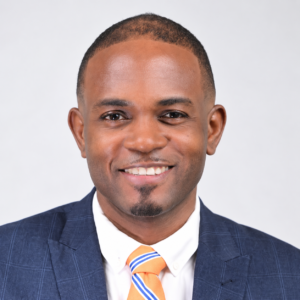
“Andre, do you know the difference between a visionary and a dreamer? A dreamer dreams with his eyes closed while a visionary dreams with his eyes open…” Edward Seaga was definitely a visionary leader. He envisioned and put into effect many institutions and policies that were necessary to maintain and improve an economic system of people and businesses in Jamaica. He had many interests including improving sports, music, culture and folklore but his passion from my interactions was to develop a diversified robust economy that unearthed the natural potential of its people to produce goods and services to compete globally.
One day I received a call on my office phone.
‘Good Day, may I speak to Dr Andre Haughton?’
“This is him”, I replied
‘Dr Haughton this is Mr Seaga, Edward Seaga, I have been reading your articles in the Gleaner; I think we need to talk.’
Mr Seaga was particularly interested in commissioning a research to analyse the sustainability of Jamaica’s foreign currency reserves over the medium to long term. He wanted a better understanding of how to maintain the value of the Jamaican currency, which he knew was a direct derivative of the total amount of foreign currency that Jamaica earns or have access to compared to the amount of foreign currency that leaves the island or is expected to leave, which was a derivative of the value of the goods and services traded or type of investment flows with the rest of the world. He was concerned that Jamaica might find itself in foreign currency liquidity problems if it continued on the same path, which reminded him of his interactions with the International Monetary Fund (IMF) when he first became Prime Minister in 1980.
In his first presentation in Parliament, he focused on the state of the economy and addressed Jamaica’s foreign currency deficit and budget deficit. For which he had to negotiate with the IMF. The extended Fund Facility (EFF) was initiated in 1981 and Jamaica gained access to $105 million in US dollars; $40 million from USAID, $40 million from four local branches of oversees banks and $25 million from Venezuela, who were then friends of the nation irrespective of the political party that was in power. These were accompanied by Structural Adjustment loans from the World Bank.
Mr Seaga had strong views on the value of the Jamaican dollar. He believed that a stronger currency illustrates a stronger national economic position. And as long as Jamaica is paying out more foreign currency that it is earning, the economy is on a roller coaster heading over a precipice. He spent much of his time as a leader trying to properly coordinate the Jamaican economy to increase or maintain the value of its output relative to the rest of the world. Mr Seaga negotiated and initialised the Caribbean Basin Initiative that allowed goods produced in the Caribbean to enter the US without tariff, which improved the volume of trade between the USA and the Caribbean. Cash strapped government back in that time engaged in barter transactions with trading partners, for example; bauxite was bartered with the USA for rice as well as with the Soviet Union for Lada cars. Efforts were made to reduce the import bill of the country. Quantitative restrictions were place on certain items that were imported and therefore some rationing of their distribution as a result. Structural Adjustment programs were accompanied by austere measures, a push to devalue the currency, job cuts and other factors that were often times seen as counterintuitive to the economic growth objectives. Many other countries around the hemisphere faced similar challenges and encountered similar circumstances with the IMF and the World Bank during that time.
“…it is as if the prevailing wisdom dictates that since there is no path of painless change, it matters not how painful the price of change can be. But it does matter… it matters to the human element which in the final analysis is… the target of the adjustment process….”
Mr Seaga was concerned about the wellbeing of the people of Jamaica. In an episode with the IMF, he asked them “Name one developing country in the world which has been a success story using devaluations imposed by the IMF adjustments.” They could not find an answer; it justified his prescribed approach to maintain the dollar at a particular value. During his tenure as Prime Minister the exchange rate maintained a stable value relative to the US which was critical in his growth expansion strategy.
Join the discussion
Tell me what you think. Comments are moderated, so keep it respectful.